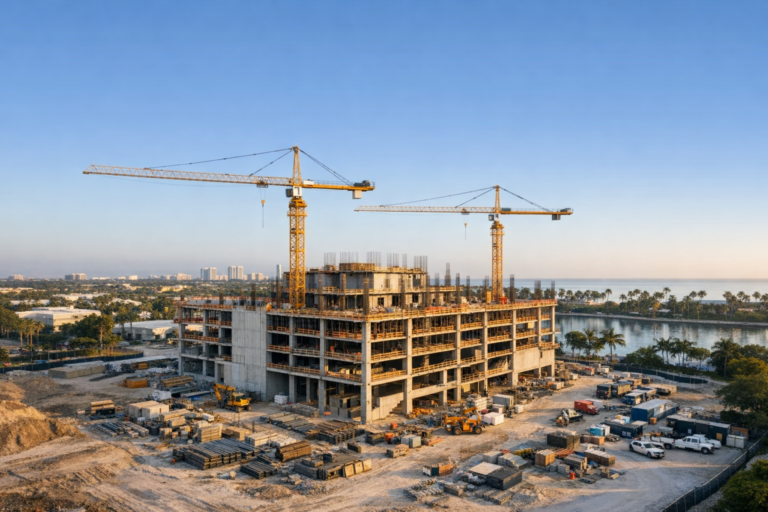
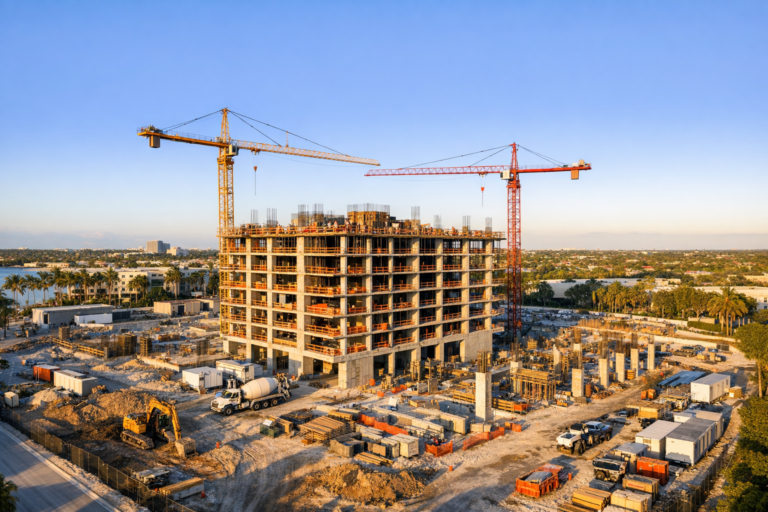
The best time of day for construction drone photography is not always the prettiest time of day. It depends on what the photos need to accomplish.
If the goal is polished marketing imagery for a developer, early morning or late afternoon usually produces the most attractive light. If the goal is consistent progress documentation for owners, contractors, lenders, or project teams, the ideal time may be the same time on every visit, even if that means choosing a less dramatic lighting window.
In South Florida, the decision is even more important. Strong sun, fast-changing clouds, coastal wind, afternoon storms, reflective surfaces, cranes, active crews, and nearby controlled airspace can all affect the way a construction site should be photographed. For construction drone photography South Florida businesses can rely on, timing should be planned around visibility, safety, consistency, and the intended use of the images.
The Short Answer: Early Morning Is Often Best
For many South Florida construction projects, early morning is the strongest overall choice. A window shortly after sunrise often provides cleaner light, cooler temperatures, lighter winds, and fewer weather disruptions compared with the afternoon.
Morning flights can also be easier to coordinate on active jobsites. Crews are mobilizing, equipment is being staged, and site activity may be more predictable than later in the day. This can help the drone pilot capture wide aerials, perimeter views, vertical lookdowns, and progress angles while maintaining a safe distance from people, cranes, and equipment.
That said, early morning is not automatically the right answer for every project. Low-angle sunlight can create long shadows that hide details on the ground. If the project team needs to evaluate site logistics, roof work, slab layout, underground utilities, stockpile locations, or parking areas, a later morning or midday flight may provide better visibility.
Match the Flight Time to the Purpose of the Photos
The most effective construction drone schedule starts with a simple question: what decision will these photos help someone make?
A developer may need attractive visuals for investors and public updates. A general contractor may need consistent monthly documentation. An architect or engineer may want context from above. A property owner may want to see how much work has been completed since the last draw request. Each use case benefits from a different lighting strategy.
For Progress Documentation
Consistency is usually more important than dramatic lighting. When photos are taken from the same general angles at the same time of day, month after month, it becomes easier to compare work completed over time.
For example, if one progress flight is captured at 8:00 a.m. with long shadows and the next is captured at 1:00 p.m. with harsh overhead light, the site may look different even if little has changed. Consistent timing makes the documentation clearer and more useful for owners, project managers, and stakeholders who are not onsite every day.
For progress photos, mid-morning is often a practical compromise. The sun is higher than early morning, shadows are shorter, and the light is still not as harsh as midday.
For Marketing and Public-Facing Updates
If the images will be used for a website, brochure, investor presentation, press update, or leasing campaign, light quality matters more. Early morning and late afternoon typically create warmer, softer, more dimensional images. Buildings look less flat, textures are easier to see, and the overall scene feels more polished.
Late afternoon can work especially well for west-facing facades, waterfront developments, or projects where the surrounding skyline is part of the visual story. However, South Florida afternoons can bring thunderstorms, stronger winds, and rapidly changing clouds, especially during the wet season. For that reason, morning is often the more dependable choice.
For Vertical Lookdowns and Site Logistics
When the goal is to show layout, staging, equipment placement, roof areas, paving progress, drainage work, or the relationship between site elements, overhead visibility is key. In these cases, midday or late morning may be more useful because shorter shadows reveal more detail.
The tradeoff is that midday light can be harsh. Concrete, white roofing materials, metal panels, vehicles, and water can create glare. A professional drone operator considers sun angle, exposure, and camera settings to preserve detail without making the image look washed out.
How South Florida Conditions Affect Drone Photography Timing
South Florida has conditions that are different from many other construction markets. The best flight window often changes by season, location, and the type of structure being photographed.
Strong Sun and High Contrast
South Florida sunlight can be intense, particularly in late spring, summer, and early fall. Around midday, bright concrete and light-colored roofing can reflect heavily, while equipment, columns, and partially enclosed areas may fall into deep shadow. This creates high contrast that can reduce image clarity.
Morning and late afternoon light is usually more forgiving. It produces more natural texture and can make progress images easier to interpret. However, if the sun is too low, long shadows from cranes, neighboring buildings, tilt-wall panels, or trees may cover important work areas.
Afternoon Storm Patterns
During the rainy season, afternoon storms can build quickly. Even if conditions look acceptable at noon, a site may be unflyable later due to rain, gusty wind, lightning risk, or low visibility. A morning schedule often reduces the chance of weather-related delays.
Professional construction drone photography is not just about capturing good images. It is also about knowing when not to fly. Weather, visibility, wind, airspace, and site safety all matter.
Coastal Wind and Sea Breeze
Many South Florida sites are near the coast, the Intracoastal, Biscayne Bay, canals, or open water. Wind can increase later in the day as sea breeze patterns develop. While modern commercial drones are capable tools, safe operation still depends on site-specific conditions and the pilot’s judgment.
Earlier flights frequently offer calmer air, cleaner motion for video, and more predictable positioning for repeat progress angles.
Reflective Glass and Water
Commercial buildings, high-rise projects, waterfront developments, and mixed-use properties often include glass, metal, pools, canals, or nearby water. These surfaces can produce intense glare at certain sun angles.
The best time may depend on the building orientation. A south-facing facade may photograph differently than an east-facing or west-facing elevation. Planning the flight around the sun path helps avoid blown-out reflections and improves the final image quality.
Recommended Times by Project Goal
| Project Goal | Best Time Window | Why It Works |
|---|---|---|
| Monthly progress documentation | Mid-morning | Good balance of visibility, manageable shadows, and repeatable lighting |
| Marketing photos | Early morning or late afternoon | Softer light, better dimension, and more polished visuals |
| Overhead site documentation | Late morning to midday | Shorter shadows make layout and site conditions easier to see |
| Construction progress video | Early morning | Often calmer wind and smoother movement with attractive natural light |
| Waterfront or skyline context | Morning or golden hour, depending on orientation | Better atmosphere and less harsh contrast when planned correctly |
Why Consistency Matters More Than Perfect Light
For long-term construction documentation, the most valuable photo is often the one that can be compared accurately with the previous flight. This is why professional drone teams typically plan repeatable angles, altitudes, camera directions, and time windows.
Consistent documentation helps stakeholders see real progress. They can track structural work, roof installation, exterior envelope progress, site grading, paving, landscaping, and surrounding access conditions. When flights are inconsistent, changes in shadows, viewpoint, and lighting can make it harder to interpret what actually changed.
This is especially important for larger projects with multiple stakeholders. Developers, owners, lenders, architects, engineers, and construction teams may all view the same image set for different reasons. The more consistent the photography, the more useful it becomes.
Safety and Compliance Should Always Come First
The best time of day is only useful if the flight can be performed safely and legally. Commercial drone operations should be conducted by an FAA Part 107 certified remote pilot. Depending on the location, airspace authorization may be required, especially near airports and controlled airspace common throughout South Florida.
On construction sites, safety planning also includes coordination with site contacts, awareness of cranes and vertical obstructions, maintaining safe distances from workers, monitoring wind and weather, and avoiding flights over people unless the operation is compliant with applicable rules.
A professional drone provider will not choose a flight time based only on aesthetics. The right decision considers jobsite activity, airspace, weather, sun angle, deliverable requirements, and the purpose of the imagery.
Questions to Ask Before Scheduling a Drone Flight
Before selecting a time, project teams should answer a few practical questions:
- Will the photos be used for documentation, marketing, reporting, or all three?
- Which areas of the jobsite must be clearly visible?
- Are there cranes, lifts, active pours, deliveries, or restricted areas to consider?
- Does the site have reflective glass, water, white roofing, or bright concrete?
- Should the images match previous flights for easier comparison?
- Is the project near controlled airspace or other flight restrictions?
- Is morning scheduling better for weather reliability during the current season?
These questions help determine whether the flight should happen early morning, mid-morning, midday, or late afternoon. They also help avoid rescheduling and ensure the final images serve the intended business purpose.
FAQ
What is the best overall time for construction drone photography in South Florida?
Early morning is often the best overall option because it usually offers softer light, cooler temperatures, calmer winds, and fewer afternoon storm risks. For documentation that requires shorter shadows, mid-morning may be better.
Is midday ever a good time for construction drone photos?
Yes. Midday can be useful for vertical overhead images where shorter shadows help show site layout, roof conditions, materials, and equipment placement. It is usually less ideal for polished marketing photos because the light can be harsh.
Should construction progress photos always be taken at the same time?
Whenever possible, yes. Taking photos at a consistent time of day makes it easier to compare progress across weekly, biweekly, or monthly flights. Repeatable angles and timing make the documentation more valuable.
Is sunrise better than sunset for drone photography?
For South Florida construction sites, sunrise or early morning is often more reliable because winds may be calmer and afternoon storms are less likely. Sunset can produce beautiful images, but it may be harder to schedule reliably during the rainy season.
Can drone photography be done while a jobsite is active?
Yes, but it requires planning. The drone pilot should coordinate with the site team, maintain safe operating distances, monitor equipment movement, and follow applicable FAA requirements. Active jobsite flights should prioritize safety over convenience.
Planning the Right Flight Time for Your Project
The best time of day for construction drone photography in South Florida depends on the purpose of the images. For most projects, early morning gives the strongest combination of attractive light, favorable weather, and operational efficiency. For detailed progress documentation, mid-morning can provide better visibility and more repeatable results. For overhead site analysis, midday may be appropriate when shadows need to be minimized.
The key is to plan the flight around the deliverable, not just the clock. A well-timed drone flight can help project teams document progress, communicate clearly with stakeholders, support marketing efforts, and preserve a reliable visual record of the build.
Skyview Motions provides professional commercial drone photography and videography for construction projects throughout South Florida. If you need consistent progress documentation or high-quality aerial visuals for an active jobsite, our team can help plan the right timing, angles, and deliverables for your project goals.