Construction projects involve constant movement. Crews rotate in and out, site conditions change daily, materials arrive, inspections take place, and decisions often need to be made before everyone can physically walk the jobsite. When communication depends only on verbal updates, spreadsheets, or a few ground-level phone photos, important context can get lost.
That is where professional progress photo documentation becomes valuable. Clear, consistent construction images give owners, developers, contractors, architects, engineers, and investors a shared visual record of what is happening on site. Instead of relying on interpretation, stakeholders can see the work, compare progress, confirm conditions, and discuss issues using the same set of visual facts.
For construction stakeholder updates, progress photos are not simply nice marketing images. When captured correctly, they become a practical communication tool that supports transparency, accountability, planning, and decision-making throughout the life of a project.
Why Stakeholder Communication Breaks Down on Construction Projects
Most construction communication problems do not happen because teams are careless. They happen because projects are complex, fast-moving, and full of people who need different information at different times.
A developer may want to understand overall schedule progress. A general contractor may need to verify sequencing or site logistics. An architect may be focused on design intent and field conditions. A lender or investor may want visible proof that funded work is advancing. A property owner may simply need confidence that the project is moving in the right direction.
When each stakeholder receives updates in a different format, confusion can grow. One person may be looking at a written report, another at a superintendent photo from a phone, and another at a construction schedule that does not show the realities of the site. Progress photos help close that gap by giving everyone a consistent reference point.
How Progress Photos Improve Construction Stakeholder Updates
Effective construction stakeholder updates do more than say work is moving forward. They show what has changed, where work is happening, and how current conditions compare with the plan. Professional progress photography improves communication in several important ways.
They Create a Shared Visual Record
Construction discussions are more productive when everyone is looking at the same facts. Aerial and ground progress photos document site conditions at a specific moment in time. This creates a visual record that can be referenced during owner meetings, schedule reviews, payment discussions, and coordination calls.
For example, if a team is discussing site access, staging, drainage, facade progress, roof work, or vertical construction, a current aerial image can often communicate the situation faster than a written paragraph. It reduces the need for lengthy explanations and helps stakeholders understand the bigger picture immediately.
They Reduce Misinterpretation
Written updates are important, but they can be interpreted differently depending on the reader. A phrase such as exterior work continues may not tell an owner how much has been completed, where work is concentrated, or whether certain areas are lagging behind.
Progress photos add visual clarity. They show the scale, location, and condition of the work. When paired with a concise written summary, photos help stakeholders understand exactly what is being reported.
They Help Remote Stakeholders Stay Informed
Many South Florida construction projects involve owners, investors, architects, consultants, or corporate decision-makers who are not on site every week. Travel schedules, distance, and competing responsibilities can make in-person visits difficult.
Drone progress photography gives remote stakeholders a reliable view of the jobsite without needing to be physically present. This is especially helpful for multi-location developers, commercial real estate groups, property managers, and executives who need high-level visibility across several active projects.
Aerial Photos Add Context Ground Photos Cannot Capture
Ground-level photography is useful for details such as interior work, finishes, specific deficiencies, or close-up documentation. However, ground photos often lack context. They show what is directly in front of the camera, but they may not show how that area relates to the rest of the site.
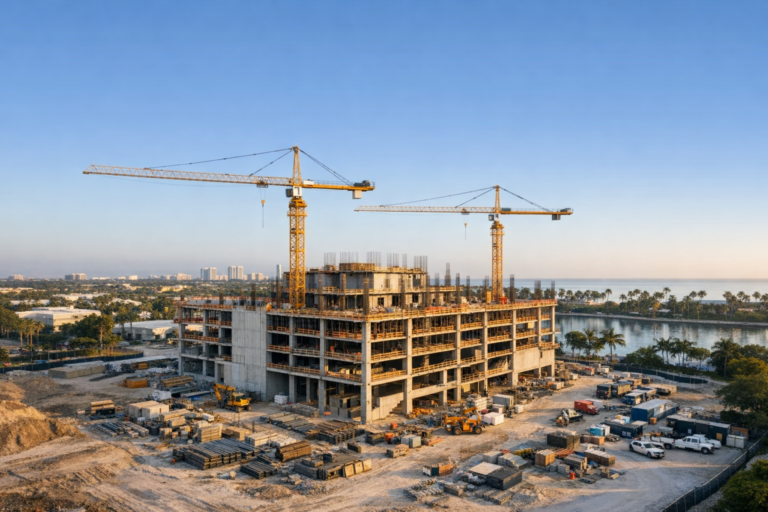
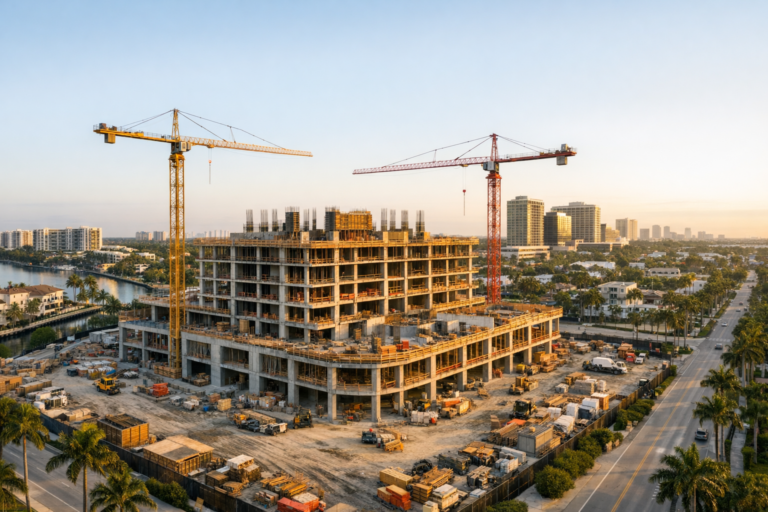
Aerial construction photography provides a broader view. From above, stakeholders can see site layout, access roads, laydown areas, equipment placement, parking conditions, exterior progress, roof coverage, surrounding properties, and the relationship between different work zones.
This wider perspective is particularly valuable for large commercial sites, multi-building developments, civil work, warehouses, mixed-use projects, hospitality properties, multifamily developments, and retail construction. Aerial images help stakeholders understand not just what is complete, but how the entire project is taking shape.
What Good Construction Progress Photo Documentation Should Include
Not all progress photos provide the same value. A random collection of images may still leave stakeholders confused. The best documentation is consistent, intentional, and aligned with how the project team communicates.
Consistent Angles and Flight Paths
Consistency is one of the most important factors in construction progress photography. When photos are captured from similar angles over time, stakeholders can compare one update to the next and quickly identify changes.
For drone documentation, this may include repeat aerial views from the same general corners of the site, overhead images from planned vantage points, and oblique angles that clearly show building elevations. This consistency turns individual photos into a visual timeline.
Coverage of Key Project Areas
A useful photo set should capture the areas stakeholders care about most. That may include building envelope progress, structural work, roof installation, site grading, paving, utilities, equipment staging, landscaping, parking areas, and access routes.
Before a recurring photo program begins, the project team should identify the most important locations and project milestones. This helps ensure that each update supports real communication needs rather than simply producing attractive images.
Clear Timing and Delivery
Progress photos are most effective when delivered on a predictable schedule. Weekly, biweekly, or monthly documentation may be appropriate depending on project pace, budget, and stakeholder needs.
Fast-moving construction phases may require more frequent updates, while slower phases may call for a monthly visual record. The key is to set expectations so stakeholders know when updates will arrive and what information they will include.
Practical Ways Teams Use Progress Photos
Progress photos support more than general communication. They can be used across many parts of project management and stakeholder reporting.
Owner and Investor Updates
Owners and investors often need a clear understanding of how visible progress aligns with schedule and budget conversations. Aerial photo updates can help show that work is advancing, identify completed areas, and provide context for upcoming phases.
For stakeholders who are not construction professionals, images can make technical updates easier to understand. They help translate project activity into something visual and accessible.
Schedule and Coordination Discussions
Construction managers and general contractors can use progress photos during planning meetings to discuss site logistics, sequencing, access constraints, and work area readiness. A current aerial perspective can reveal conditions that may not be obvious in a written report.
For example, photos may help teams discuss whether a staging area needs to move, whether exterior access is restricted, or whether multiple trades are concentrated in the same area.
Payment Applications and Milestone Reviews
While progress photos do not replace formal inspections, contracts, or professional certifications, they can support conversations around completed work and milestone visibility. They provide a dated visual reference that may help stakeholders understand what has been performed during a reporting period.
Marketing and Public Communication
Some progress images can also be useful for marketing, leasing, community updates, or public relations. Developers and commercial property teams often need professional visuals to show momentum before a project is complete. High-quality drone photography can support those needs while also serving documentation purposes.
Best Practices for Better Photo-Based Stakeholder Updates
To get the most from construction progress photos, teams should treat them as part of the project communication process, not as an afterthought.
Define the audience. Identify who will receive the photos and what they need to understand. Owners, lenders, architects, contractors, and marketing teams may each need a different level of detail.
Set a documentation schedule. Choose a cadence that matches the project pace. Consistency makes updates easier to compare and more useful over time.
Capture both overview and detail. Aerial images provide site context, while ground-level photos can document specific conditions. Together, they create a more complete picture.
Organize images clearly. Photos should be easy to sort, review, and reference. Proper file organization, dates, and project naming conventions help teams find what they need later.
Pair photos with concise notes. A short summary explaining what the photos show can help stakeholders focus on the most important changes.
Use a qualified drone operator. Commercial drone work should be performed by an FAA Part 107 certified remote pilot who understands airspace, safety, site coordination, and professional documentation standards.
Safety, Privacy, and Professional Standards Matter
Construction sites are active work environments. Drone photography should be planned carefully and conducted with safety as the priority. That includes coordinating with site leadership, avoiding interference with crews or equipment, maintaining appropriate visual line of sight, and operating in accordance with applicable FAA requirements.
In South Florida, drone operators may also need to account for controlled airspace, nearby airports, dense urban environments, coastal weather conditions, wind, rain, and temporary site restrictions. Professional planning helps avoid delays and ensures the documentation process does not disrupt the project.
Privacy and confidentiality are also important. Construction photos may show sensitive site details, neighboring properties, equipment, or proprietary project information. A professional drone services provider should understand how to handle commercial imagery responsibly and deliver files according to the client’s intended use.
Choosing the Right Progress Photo Partner
When selecting a company for construction progress photography, price should not be the only consideration. Stakeholder communication depends on reliable, consistent, and usable documentation. The provider should understand construction environments, timing, safety, and the level of quality required for professional reporting.
Look for a drone services company that can explain how they plan repeatable shots, coordinate with active jobsites, deliver organized image sets, and adapt to construction milestones. Experience with commercial drone photography and construction progress documentation is important because the goal is not just to capture beautiful images. The goal is to create a dependable visual communication tool.
Skyview Motions supports South Florida construction teams with professional drone photography and videography designed for clear project documentation and stakeholder communication. With FAA Part 107 certification and experience serving commercial clients, the focus is on safe operations, consistent visuals, and practical deliverables that help teams communicate with confidence.
FAQ
How often should construction progress photos be taken?
The right schedule depends on the project size, pace, and reporting needs. Weekly or biweekly updates are common for active phases, while monthly documentation may be enough for slower-moving projects. The most important factor is consistency.
Are drone photos better than ground photos for construction updates?
Drone photos and ground photos serve different purposes. Drone imagery provides overall site context, layout, access, and visible exterior progress. Ground photography is better for close-up details and interior documentation. Many projects benefit from using both.
Can progress photos help with disputes?
Progress photos can provide a dated visual record of site conditions, which may help clarify what was visible at a specific time. They should not be viewed as a replacement for contracts, inspections, professional reports, or legal guidance, but they can support better documentation.
What should be included in a construction stakeholder update?
A strong update typically includes current progress photos, a brief summary of work completed, upcoming activities, schedule notes, key decisions needed, and any visible site conditions that stakeholders should understand.
Do commercial drone operators need FAA certification?
Yes. In the United States, commercial drone operations generally require the remote pilot to hold an FAA Part 107 certificate. Hiring a properly certified operator helps support safe and compliant commercial drone work.
Clearer Photos Lead to Clearer Project Conversations
Construction projects depend on timely decisions and shared understanding. Progress photos make stakeholder communication more visual, more accurate, and easier to follow. They help reduce confusion, keep remote decision-makers informed, and create a consistent record of how the project evolves from one phase to the next.
For teams that want better construction stakeholder updates, professional drone progress photography offers a practical way to improve clarity without adding unnecessary complexity. When images are captured consistently, organized properly, and delivered on schedule, they become more than project photos. They become communication assets.
If your South Florida construction project needs reliable aerial documentation, Skyview Motions can help create clear, professional progress photography and videography that supports better stakeholder communication from start to finish.