Construction reporting depends on clarity. Owners, developers, lenders, contractors, architects, engineers, and project managers all need to understand what is happening on site, even when they cannot be there in person. Written updates are important, but they only tell part of the story. Professional photos provide the visual proof that makes construction reports easier to understand, verify, and act on.
High-quality construction project photography helps teams document progress, identify changes, communicate site conditions, and create a reliable visual record from preconstruction through closeout. When captured consistently and professionally, photos become more than marketing assets. They become practical project management tools.
For busy construction teams in South Florida, where schedules, weather, subcontractor coordination, inspections, and stakeholder expectations can move quickly, clear visual documentation can make reporting more accurate and more efficient.
Why Photos Matter in Construction Project Reporting
Construction projects involve many moving parts. A single report may need to explain completed work, current site conditions, material placement, safety considerations, access issues, schedule impacts, and upcoming milestones. Photos make these updates easier to interpret because they give stakeholders visual context that written descriptions often cannot provide on their own.
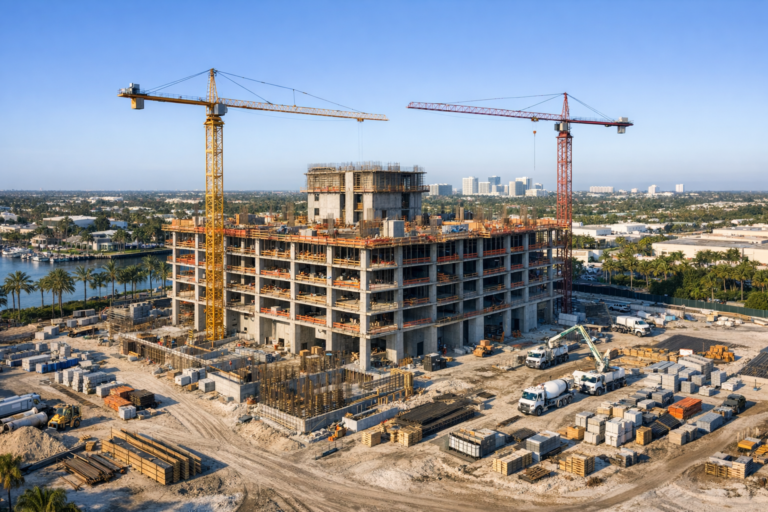
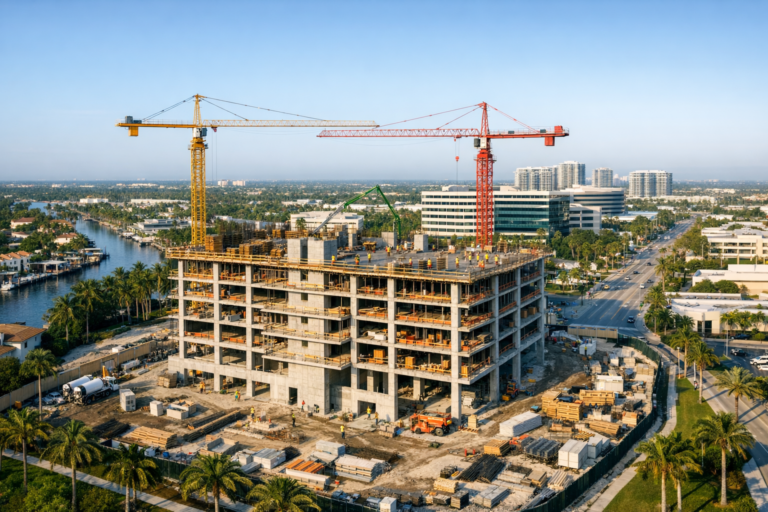
For example, a project manager might write that structural steel installation is progressing on the east side of a building. A professionally captured aerial image can show exactly how much of the structure is in place, how the work relates to the overall site, where material staging is located, and whether access routes remain clear. That level of context helps decision-makers understand the real condition of the project without relying on assumptions.
Professional photography also creates consistency. When images are captured from planned vantage points at regular intervals, teams can compare progress over time with far greater accuracy than they can with random phone photos taken from different locations, heights, and angles.
What Professional Construction Photos Add to a Report
A useful construction report should be clear, organized, and supported by evidence. Professional photos strengthen that report in several ways.
They Document Progress Visually
Progress photos show what work has been completed and where the project stands at a specific point in time. This is especially useful for owners and investors who may not visit the site regularly. Visual updates can confirm that milestones are moving forward and help explain the sequence of work.
Aerial drone imagery is particularly valuable because it captures the full site layout in one view. Ground-level photos show detail, while aerial images show relationships: building footprint, site logistics, staging areas, parking, adjacent roads, drainage areas, and surrounding properties.
They Reduce Miscommunication
Construction reports often involve people with different technical backgrounds. A superintendent, architect, lender, and property owner may all read the same report differently. Photos help bridge that communication gap by showing the condition being described.
Instead of relying only on phrases such as substantially complete, ready for inspection, or awaiting installation, a report can include images that make the status more obvious. This reduces back-and-forth questions and helps everyone stay aligned.
They Create a Time-Stamped Record
Construction projects benefit from a clear visual history. Photos captured on a regular schedule can help document when work occurred, what conditions existed at a given time, and how the site changed throughout the project.
This record can be useful for internal reviews, owner updates, project closeout packages, warranty discussions, and future planning. While photos do not replace contracts, inspection reports, or official documentation, they can support a more complete project file.
Drone Photography and Ground Photography Work Best Together
The strongest construction reports often combine aerial imagery with ground-level photography. Each perspective serves a different purpose.
Drone photography is excellent for showing the big picture. It can capture the entire jobsite, overall progress, roof conditions, grading, site access, landscape installation, parking areas, utilities, and the relationship between buildings and surrounding infrastructure. For large commercial, multifamily, industrial, municipal, or mixed-use projects, this perspective is difficult to achieve from the ground.
Ground photography is better for details. It can document specific installations, finish work, material conditions, equipment placement, signage, access points, and close-range site observations.
When both are used thoughtfully, reports become more complete. An aerial photo may show that a building pad has been prepared across the site, while ground photos can show compaction areas, formwork, installed systems, or finished surfaces in greater detail.
How Consistent Photo Documentation Improves Reporting Quality
Consistency is one of the most important factors in construction documentation. A single impressive photo is useful, but a consistent series of images captured at planned intervals is far more valuable for reporting.
Professional construction photography should typically consider:
- Repeatable angles from the same or similar locations
- Consistent flight paths or capture points for drone imagery
- Wide overview images and closer detail images
- Clear organization by date, phase, location, or report period
- Proper timing based on project milestones
- Attention to lighting, weather, site activity, and visibility
This consistency helps stakeholders compare one report period to the next. It also makes progress easier to understand because the viewer is not forced to reorient themselves with every new update.
Common Reporting Uses for Construction Project Photography
Professional construction photos can support many types of reporting, depending on the project and stakeholders involved.
Owner and Developer Updates
Owners and developers often need concise, visual updates that show meaningful progress. Photos can help them understand whether the project is advancing according to expectations, communicate with partners, and track visible milestone completion.
Lender and Investor Reporting
Many projects require periodic progress updates for financial stakeholders. Professional images can provide visual context that supports draw requests, budget discussions, and project status reviews. The photos should be organized, current, and directly relevant to the reporting period.
Internal Project Management
General contractors, construction managers, and superintendents can use visual records to review site logistics, monitor staging, assess access conditions, and compare progress against schedule expectations. Photos can also support coordination conversations with subcontractors and consultants.
Architectural and Engineering Coordination
Architects and engineers may benefit from visual updates when reviewing site conditions remotely. While photos are not a substitute for required inspections or professional field observations, they can help teams better understand current conditions before meetings, site visits, or design discussions.
Marketing and Public Communication
Some construction photos serve a dual purpose. In addition to reporting, polished images can be used for project announcements, social media updates, stakeholder presentations, website content, and completion portfolios. Professional-quality visuals help present the project clearly and credibly.
What Makes a Construction Photo Useful Instead of Just Attractive
Not every good-looking image is useful for reporting. A strong reporting photo should be clear, relevant, and intentional. It should answer a question or support a specific update.
Useful construction photos typically show:
- The full area being discussed in the report
- Enough surrounding context to identify location on site
- Visible progress or site condition changes
- Proper exposure and sharpness
- Minimal obstruction from vehicles, equipment, or temporary materials when possible
- A perspective that can be repeated later for comparison
Professional photographers understand how to balance composition with documentation. The image should be visually clean, but accuracy and usefulness come first. For construction reporting, the goal is not simply to make the site look impressive. The goal is to communicate what is happening clearly.
Planning an Effective Construction Photography Schedule
The right photography schedule depends on project size, reporting requirements, and pace of work. Some projects need monthly updates. Others benefit from biweekly, weekly, or milestone-based documentation.
Common capture points include:
- Preconstruction site conditions
- Clearing, grading, and earthwork
- Foundation and slab progress
- Vertical construction milestones
- Roofing and envelope work
- Mechanical, electrical, and plumbing rough-in visibility where appropriate
- Exterior finishes and site improvements
- Final completion and closeout imagery
In South Florida, scheduling should also consider weather, jobsite access, sun angle, wind, active equipment, and any location-specific airspace considerations. For drone operations, hiring an FAA Part 107 certified operator is important because commercial drone flights must be conducted by a properly certified remote pilot and in accordance with applicable FAA rules.
Professional Standards Matter on Active Jobsites
Construction sites are controlled environments with real safety considerations. A professional photographer or drone operator should coordinate with the project team before arriving, understand where they are allowed to be, follow site access requirements, and avoid interfering with active work.
For aerial work, professional drone operations require more than launching a drone and taking pictures. The operator should evaluate flight conditions, maintain safe operating practices, consider people and property on site, and understand applicable airspace requirements. Reliable operators also communicate clearly about scheduling, deliverables, limitations, and expected turnaround.
This professionalism protects the project team and improves the quality of the final documentation.
How to Get Better Results From Your Construction Photo Reports
To make photography more valuable for reporting, project teams should define expectations before the first capture. A simple plan can prevent missed details and ensure the final images support actual project needs.
Before scheduling photography, consider these questions:
- Who will review the photos?
- What decisions or updates will the images support?
- How often should the site be documented?
- Which areas must be photographed every time?
- Are aerial images, ground images, or both needed?
- Should photos be organized by date, location, phase, or report category?
- Are there access rules, safety requirements, or sensitive areas to avoid?
Clear answers help the photographer capture images that are not only attractive, but genuinely useful to the reporting process.
Why South Florida Projects Benefit From Professional Drone Documentation
South Florida construction sites often face fast-moving schedules, dense commercial corridors, coastal weather, limited site access, and multiple stakeholders who may not all be local. Professional drone photography can help simplify reporting by providing a concise aerial view of progress and site conditions.
For commercial real estate developments, multifamily properties, hospitality projects, retail centers, industrial sites, and infrastructure-adjacent work, aerial documentation can show scale and context in a way that ground photos cannot. It helps stakeholders see how the project fits into the surrounding environment, including roads, neighboring properties, parking areas, landscape buffers, and access points.
Skyview Motions provides commercial drone photography and videography services for construction teams that need clear, reliable visual documentation. With FAA Part 107 certification and experience serving South Florida clients, the focus is always on safe operations, professional communication, and images that support practical business decisions.
FAQ
How often should construction progress photos be taken?
The best schedule depends on the project. Monthly photography may be enough for slower-moving projects, while weekly or biweekly documentation may be better for active commercial jobsites. Milestone-based photography is also useful when major phases need to be documented clearly.
Are drone photos better than ground photos for construction reporting?
Drone photos and ground photos serve different purposes. Drone images show the full site, context, and overall progress. Ground photos show details that may not be visible from the air. Many construction reports are strongest when they include both.
Can construction photos be used for closeout documentation?
Yes. Professional photos can support closeout packages by showing completed conditions, exterior improvements, site layout, and finished project features. They should be organized clearly so they are easy to reference later.
Do commercial construction drone photos require a certified pilot?
Yes. In the United States, commercial drone operations require a remote pilot with FAA Part 107 certification. The operator must also follow applicable FAA rules and consider airspace, weather, people, property, and site safety.
What should be included in a construction photo report?
A useful report should include clear overview images, relevant detail photos, date-based organization, consistent viewpoints when possible, and captions or context when needed. The images should directly support the progress update or decision being made.
Conclusion
Professional construction photos make project reporting clearer, more accurate, and more useful. They help teams document progress, communicate with stakeholders, reduce confusion, and maintain a visual record throughout the life of a project. When captured consistently and with purpose, they become an essential part of modern construction communication.
For South Florida construction teams, developers, property owners, and project managers, professional drone photography adds valuable perspective that is difficult to achieve from the ground alone. If your project needs reliable visual documentation for reporting, progress updates, or stakeholder communication, Skyview Motions can help capture the images your team needs to stay informed and aligned.