Your best completed projects are more than finished jobs. They are proof of your company’s capabilities, craftsmanship, coordination, and ability to deliver. Yet many construction companies move from one project to the next without properly photographing the work they worked so hard to complete.
That is a missed opportunity. Strong construction portfolio photography gives contractors, developers, and construction managers a visual record that can support proposals, marketing, recruiting, client communication, awards submissions, and long-term brand credibility. It helps future clients see what you can deliver before they ever speak with your team.
In competitive construction markets, especially across South Florida, professional photography is no longer just a nice addition to a website. It is a business asset. The right images can communicate scale, quality, site efficiency, and finished results in a way that written descriptions alone cannot.
Why Project Photography Matters for Construction Companies
Construction is a trust-based industry. Owners, developers, property managers, architects, and public agencies want confidence that a contractor can handle the complexity of their project. A well-organized portfolio helps demonstrate that confidence visually.
Professional project images show the type of work your company performs, the environments you operate in, and the quality of the final outcome. They make your experience easier to understand for people who may not read long project descriptions or technical qualifications in detail.
Good photography also creates consistency. Instead of relying on phone photos taken at random angles, your company can present completed work with the same level of professionalism that went into planning, managing, and building the project.
What Construction Portfolio Photography Helps You Communicate
The best project photos are not just attractive. They answer practical questions your prospective clients are already asking.
Project Scale and Complexity
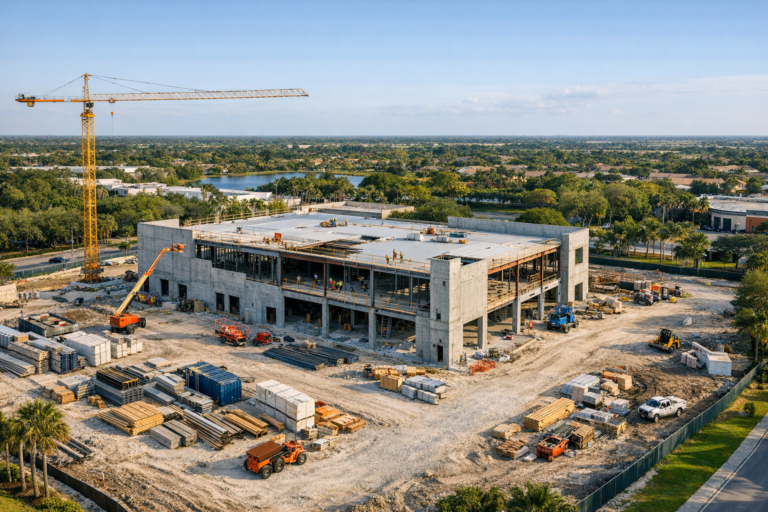
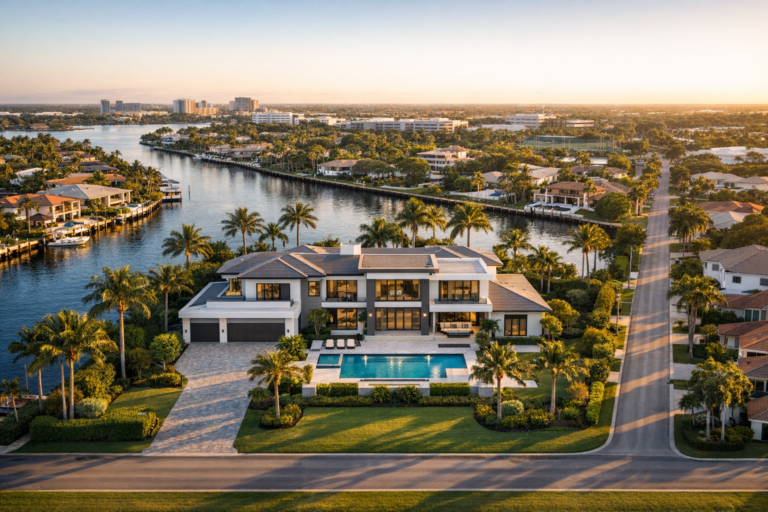
Aerial drone photography can show the full footprint of a commercial build, industrial site, multifamily development, roadway improvement, or large renovation. From the ground, a project may appear impressive but incomplete in context. From above, the viewer can understand site layout, access points, surrounding infrastructure, landscaping, parking, and building placement.
For general contractors and developers, this context can be especially valuable when presenting large or complex work. It helps clients quickly understand that your team has managed projects of similar size and scope.
Craftsmanship and Finished Quality
Ground-level and close-range detail photography can highlight exterior finishes, concrete work, roofing, facade details, hardscaping, entryways, amenities, signage areas, structural elements, and other visible features. These images help communicate attention to detail and the quality of the finished product.
For specialty contractors, this is often essential. A roofing contractor, sitework contractor, landscape contractor, concrete contractor, or exterior envelope specialist needs images that clearly show the portion of the project they were responsible for.
Experience in Specific Markets
Owners often want to hire construction teams that understand their property type. A strong portfolio can show experience with commercial real estate, retail centers, hospitality, schools, healthcare facilities, industrial properties, multifamily communities, municipal projects, and mixed-use developments.
When organized properly, your image library becomes a visual qualification tool. Instead of saying you have experience in a sector, you can show it clearly.
How Better Project Photos Support Sales and Proposals
Construction companies rely heavily on qualifications, relationships, proposals, and interviews. Photography can strengthen each of those areas.
In proposals, professional images break up dense text and make your experience easier to evaluate. During interviews or presentations, they help your team tell a clear story about project challenges, solutions, sequencing, and outcomes. On your website, they give prospective clients immediate evidence that your company performs the type of work they need.
Images can also support prequalification packages, capability statements, brochures, trade show materials, social media, email campaigns, and project case studies. A single completed project can generate visual assets that serve your business for years.
The key is to photograph projects intentionally. A rushed snapshot taken after substantial completion is rarely enough. The best results come from planning the shoot around the project’s strongest features, the right light, clean site conditions, and the final use of the images.
The Role of Drone Photography in Construction Portfolios
Drone photography is especially valuable for construction portfolio photography because it shows perspective that cannot be captured from the ground. For commercial and large-scale projects, aerial images can reveal organization, access, location, building massing, site improvements, and relationship to the surrounding area.
Drone images are particularly useful for:
- Commercial buildings and office properties
- Retail centers and shopping plazas
- Multifamily and condominium developments
- Industrial and warehouse facilities
- Hospitality and resort properties
- Roadway, infrastructure, and site development work
- Large renovations and exterior improvements
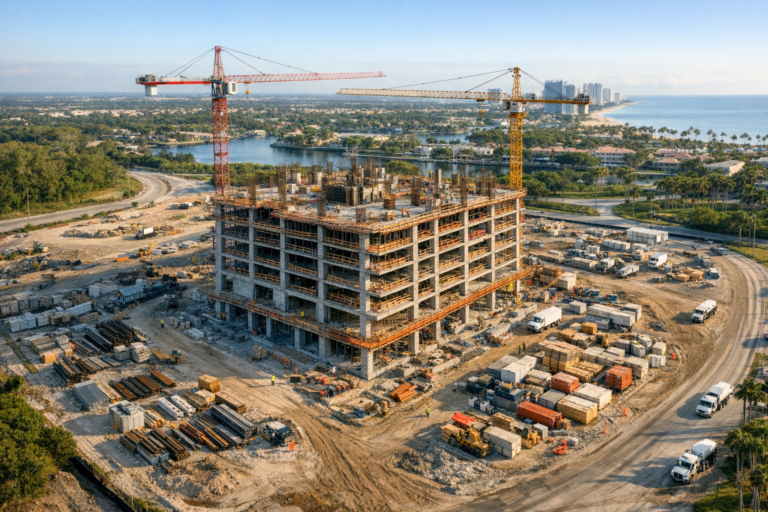
Aerial photography can also help tell a before-and-after story when combined with construction progress imagery. For example, a contractor may document land clearing, vertical construction, exterior completion, and final landscaping. When presented together, those images show the full transformation of the site.
When to Photograph a Completed Construction Project
Timing has a major impact on image quality. The ideal time to photograph a completed project is after major work is finished, temporary equipment is removed, landscaping is installed, exterior surfaces are clean, and the site is visually ready.
However, waiting too long can create complications. Occupants may move in, vehicles may crowd the property, signage may change, landscaping may become overgrown, or access may become more restricted. For many projects, the best window is shortly after completion and before the property is fully occupied.
Lighting also matters. Early morning and late afternoon often provide more flattering light, better shadows, and a more polished appearance than harsh midday sun. In South Florida, weather should also be considered. Clear conditions, manageable wind, and safe flight conditions are important for drone operations.
What to Include in a Construction Photography Shot List
A clear shot list helps ensure the final gallery is useful, not just visually appealing. Before scheduling photography, construction companies should identify the images most valuable for marketing, sales, and documentation.
Recommended Portfolio Images
- Wide aerial views showing the full project and surrounding context
- Angled drone images that highlight building shape, access, and site layout
- Front elevation and primary entrance views
- Key exterior details, finishes, and architectural features
- Parking, landscaping, hardscaping, and site improvements
- Interior spaces if relevant and approved
- Specialty trade work or unique construction details
- Before-and-after angles if progress images were captured
The shot list should match the company’s goals. A general contractor may need broad portfolio images for proposals. A developer may want marketing-ready visuals that show location and amenities. A subcontractor may need detailed images of a specific scope. Defining the purpose in advance leads to stronger results.
Common Mistakes Construction Companies Make With Project Photos
Many construction firms understand the value of project photography but still fail to capture their work effectively. The most common mistakes are easy to avoid with planning.
Waiting Until the Site No Longer Looks Its Best
Once a property is turned over, conditions can change quickly. Tenant vehicles, temporary banners, maintenance activity, weathering, or operational clutter can reduce visual quality. Schedule photography while the project still looks fresh and controlled.
Relying Only on Phone Photos
Phone images can be useful for internal communication, but they rarely provide the composition, resolution, perspective, and consistency needed for high-quality marketing and proposal materials. Your portfolio should reflect the standard of your work.
Not Capturing Enough Angles
One or two images are usually not enough to tell a complete project story. Capture a mix of aerial, wide, medium, and detail views so the images can serve multiple purposes across your website, proposals, presentations, and social channels.
Ignoring Drone Compliance and Site Safety
Commercial drone operations require a qualified remote pilot operating under applicable FAA rules. On active or recently completed construction sites, safety planning also matters. A professional drone team should evaluate airspace, weather, takeoff and landing areas, people on site, nearby obstacles, and communication with site contacts before flying.
How to Build a Strong Construction Image Library
The most effective construction portfolios are built over time. Instead of treating photography as an afterthought, make it part of your closeout and marketing process.
Create a simple system for identifying projects worth photographing. Consider project size, visibility, market sector, unique challenges, architectural quality, client approval, and future sales value. Not every project needs a full photography package, but your best work should be documented properly.
It also helps to organize images by project name, location, service type, completion date, industry sector, and usage rights. This makes it easier for marketing and business development teams to find the right images quickly when preparing proposals or updating the website.
Why Professional Presentation Builds Trust
Prospective clients often evaluate a construction company before making contact. If your website or proposal materials show outdated, low-quality, or inconsistent images, it can weaken the impression of your team’s capabilities.
Professional photography does not replace qualifications, safety performance, references, or technical expertise. But it supports all of them by making your experience easier to see and remember. Strong visuals help decision-makers connect your company’s name with completed, real-world results.
For construction companies competing in South Florida’s active commercial market, that visual credibility can make a meaningful difference. High-quality images show that you take pride in your work and understand the importance of presentation.
FAQ
How often should a construction company update its portfolio photography?
Most companies should update their portfolio whenever a major or strategically important project is completed. If your website shows projects that no longer represent your current capabilities, it is time to refresh your image library.
Should construction projects be photographed before they are fully complete?
Progress images can be extremely useful, but final portfolio photography is usually best after exterior work, cleanup, landscaping, and visible punch list items are complete. For larger projects, both progress and final photography may be worthwhile.
Do drone photos replace ground photography?
No. Drone photography and ground photography work best together. Aerial images show scale and context, while ground-level images capture entrances, details, finishes, and how people experience the space.
What should we prepare before a construction photo shoot?
Confirm site access, remove unnecessary clutter where possible, coordinate with the property owner or manager, identify must-have shots, and communicate any safety restrictions. For drone work, the operator should also review airspace, weather, and site conditions.
Can construction portfolio images be used in proposals and marketing materials?
Yes, that is one of their main advantages. Professional images can support websites, proposals, capability statements, presentations, brochures, social media, recruiting materials, and award submissions, depending on usage permissions and client approvals.
Turn Your Best Projects Into Long-Term Marketing Assets
Your completed work is one of the strongest forms of proof your construction company has. When photographed professionally, each project can continue working for your business long after the job is finished.
Construction portfolio photography helps communicate quality, experience, scale, and credibility in a way that clients can understand quickly. With thoughtful planning, a clear shot list, and professional aerial and ground perspectives, your best work can become a reliable asset for business development and brand trust.
Skyview Motions provides FAA Part 107 certified commercial drone photography and videography for construction companies, developers, and commercial property professionals throughout South Florida. If your team has a completed project that deserves to be documented properly, professional drone photography can help present it with the clarity and quality it deserves.