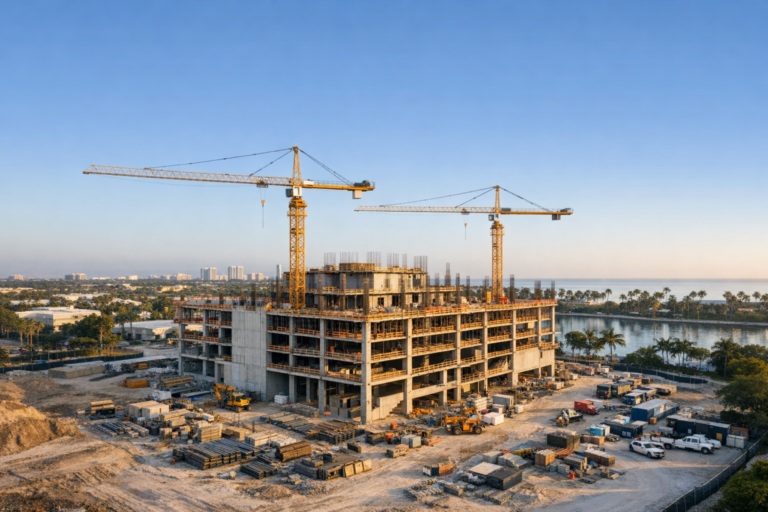
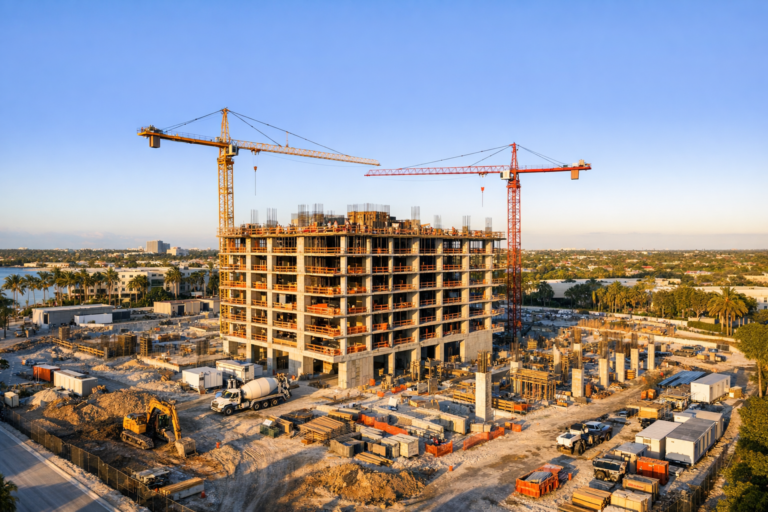
Construction moves quickly. A site can look completely different from one week to the next, and once a stage is covered, enclosed, paved, or occupied, it may never be visible in the same way again. That is why construction milestone photography is more than a marketing asset. It is a practical documentation tool for owners, developers, contractors, architects, engineers, and project stakeholders.
Professional milestone photos create a reliable visual record of what happened, when it happened, and how the project developed over time. They help teams communicate progress, support reporting, verify completed work, and preserve important phases before they disappear behind finishes, walls, landscaping, or tenants.
For commercial projects in South Florida, where schedules, weather, site logistics, and stakeholder visibility all matter, planned milestone photography can be especially valuable. The key is knowing which moments are worth documenting professionally and why they matter.
Why Construction Milestone Photography Matters
Most project teams already take casual jobsite photos with phones. Those images have their place, but they are not a replacement for structured professional documentation. Phone photos are often inconsistent, taken from random angles, poorly organized, or focused on isolated details without showing the broader context of the site.
Professional construction milestone photography provides consistency. A drone can capture the overall site layout, building footprint, access points, staging areas, surrounding roads, and relationship of the project to neighboring properties. Ground-level photography can document critical details, materials, finishes, and workmanship. Together, they create a more complete record.
Milestone images can be used for owner updates, lender reports, investor presentations, internal project reviews, public relations, leasing campaigns, and long-term archives. They can also help reduce misunderstandings by showing conditions clearly at specific stages of the build.
1. Pre-Construction Site Conditions
One of the most overlooked milestones happens before vertical construction begins. Pre-construction photography documents the existing condition of the property, surrounding access roads, adjacent structures, vegetation, drainage features, utilities, and any visible site constraints.
This stage is important because it establishes a baseline. If questions arise later about site access, neighboring property conditions, staging areas, or changes to the land, pre-construction images can provide useful visual context. For developers and general contractors, this record can be especially helpful on urban infill sites, tight commercial parcels, and projects near occupied properties.
What to capture at this stage
Useful pre-construction images typically include aerial views of the entire parcel, ground-level perimeter photos, access points, nearby roadways, parking areas, drainage conditions, and any existing structures scheduled for demolition or renovation. The goal is not simply to take attractive photos. The goal is to document the starting point clearly and objectively.
2. Site Clearing, Grading, and Earthwork
Once clearing, excavation, grading, and earthwork begin, the project starts changing quickly. This milestone is worth documenting because it shows how the site is being prepared before foundations, underground utilities, and structural systems are installed.
Aerial photography is particularly useful during this phase. From the air, stakeholders can see the overall site geometry, soil movement, retention areas, construction access, stockpiles, equipment placement, and the relationship between work zones. These perspectives are often difficult to understand from ground-level photos alone.
For South Florida projects, where drainage, elevation, and site preparation can be central to successful development, documenting earthwork progress can be valuable for both communication and historical reference. These images help show that the project is moving beyond planning and into visible execution.
3. Foundation and Structural Start
The foundation stage is one of the most important moments to document because so much of the work will eventually be hidden. Once slabs are poured, underground systems are covered, and structural elements rise above grade, earlier site conditions are no longer visible.
Professional photos at this stage can show foundation layout, building footprint, slab areas, columns, rebar placement from a safe observational distance, and the first major signs of vertical progress. For owners and development teams, these images often mark the point when a project begins to feel tangible.
Why this milestone is valuable
Foundation and early structural photos help communicate progress to people who are not on site regularly. They also show the scale of the project in a way that drawings and schedules cannot. Aerial views can make it clear how the structure sits on the property, how access is being maintained, and how much of the site remains available for staging or future phases.
These images are especially useful for investor updates, project dashboards, and construction progress presentations where stakeholders need a quick, visual understanding of where the project stands.
4. Topping Out and Major Structural Completion
The topping out stage is a major milestone for many commercial projects. It signals that the primary structural frame has reached its intended height or that a major structural phase has been completed. Even when a formal topping out ceremony is not held, this moment is worth photographing professionally.
From a documentation standpoint, topping out photos show the full scale of the development. They can capture the completed frame, roof structure, surrounding site activity, crane placement, and progress compared with nearby buildings or infrastructure. From a marketing standpoint, these images are often among the most impressive visuals of the entire construction process.
This is also a strong opportunity for coordinated aerial and ground photography. Drone images can show the building in its broader environment, while ground photos can capture crews, materials, structural details, and project signage when appropriate. If people are included, safety, permissions, and site rules should always be considered.
5. Building Envelope, Roofing, and Exterior Completion
Once the exterior envelope begins taking shape, the project becomes far easier for non-technical stakeholders to understand. Walls, windows, roofing, waterproofing, cladding, and exterior finishes transform the site from a structural frame into a recognizable building.
This milestone is important because the building appearance begins to align with renderings, leasing materials, or ownership expectations. For commercial real estate teams, this is often the phase when updated visuals become useful for pre-leasing, tenant communication, sales materials, and public-facing project updates.
Photos that provide the most value
At this stage, milestone photography should capture all building elevations, roof progress where safe and permissible by drone, exterior finish installation, parking and access improvements, landscape preparation, and the relationship between completed exterior work and remaining site activity.
Consistency matters here. Repeating the same aerial angles over time can show before-and-after progress clearly. This is helpful for reporting and can later support a compelling visual timeline of the full construction process.
6. Final Completion and Turnover
Final completion photography documents the finished project before occupancy, heavy use, or future modifications change the appearance of the property. This is one of the most important milestones for marketing, portfolio development, project closeout, and long-term records.
Professional final photos should show the completed building exterior, site improvements, parking areas, landscaping, signage areas when appropriate, entries, amenities, and overall property context. Aerial imagery can highlight access, proximity to surrounding roads, waterfronts, business districts, or nearby commercial corridors. Ground photography can showcase materials, design details, pedestrian experience, and finished spaces.
For developers, contractors, architects, and property owners, final completion images often have a long useful life. They can support future proposals, award submissions, leasing campaigns, investor communications, and company portfolios. Because of that, final photography should be planned carefully rather than treated as an afterthought.
How to Plan a Better Milestone Photography Schedule
The best results come from planning milestone photography before the project is too far along. A simple schedule can prevent missed opportunities and ensure the visual record follows the actual construction timeline.
Start by identifying the project stages that matter most to your stakeholders. A developer may care about investor updates and leasing visuals. A general contractor may prioritize documentation, owner reporting, and portfolio images. An architect may want finished design photography and select progress stages that show how the concept came together. A property manager may care most about final conditions, access, exterior features, and tenant-facing assets.
It is also helpful to decide how often recurring progress photos should be captured between major milestones. Monthly drone photography is common for many commercial projects, while larger or faster-moving projects may benefit from more frequent documentation. The right cadence depends on project size, schedule, complexity, and reporting requirements.
What Professional Drone Photography Adds to Construction Documentation
Drones are not just used to create dramatic overhead images. In construction, they are valuable because they provide safe, efficient, high-context views of active jobsites. Aerial perspectives can show the entire project in one frame, including access roads, staging zones, trades working in different areas, site constraints, and progress across multiple building sections.
For commercial projects, a professional drone operator should understand more than camera settings. They should understand airspace awareness, FAA Part 107 requirements, jobsite safety expectations, communication with site contacts, and how to capture images that are useful for business purposes. On active construction sites, coordination matters. Flights should be planned around site activity, safety considerations, weather, and any location-specific restrictions.
In South Florida, weather and lighting can change quickly. Morning flights often provide cleaner light, calmer winds, and fewer harsh shadows, but every site is different. A knowledgeable drone photography team can recommend timing based on the building orientation, surrounding structures, and the intended use of the images.
Common Mistakes to Avoid
One common mistake is waiting until the end of the project to hire a photographer. Final photos are valuable, but they cannot recreate earlier phases. If foundation, structural, or sitework milestones were missed, that part of the visual story is gone.
Another mistake is capturing photos without a consistent plan. Random images may look fine individually but fail to show progress clearly over time. Consistent angles, repeatable flight paths where appropriate, and organized file delivery make construction milestone photography far more useful.
It is also important not to focus only on beauty shots. Attractive images matter, especially for marketing, but documentation should also be practical. Wide site views, progress comparisons, access points, and specific work areas may be just as valuable as polished hero images.
Frequently Asked Questions
How often should a construction project be photographed?
It depends on the project size, schedule, and reporting needs. Many commercial projects benefit from monthly progress photography, with additional visits scheduled around major milestones such as foundation work, topping out, exterior completion, and final turnover.
Is drone photography useful for smaller construction projects?
Yes. Even smaller commercial projects can benefit from aerial documentation because drone photos show site context, access, layout, and progress in ways ground photos cannot. The value depends less on project size and more on whether clear documentation helps the team communicate and make decisions.
Can construction milestone photos be used for marketing?
Yes. Milestone images can support social media updates, project announcements, website portfolios, leasing materials, investor presentations, and proposal packages. The best approach is to capture images that serve both documentation and marketing needs.
Who should coordinate the photography visit?
Usually, a project manager, superintendent, owner representative, or marketing contact coordinates scheduling. For active jobsites, the photographer should understand site access requirements, safety procedures, preferred shooting areas, and any restrictions before arriving.
What is the difference between progress photography and milestone photography?
Progress photography is often recurring documentation captured at consistent intervals. Milestone photography focuses on specific key stages of the project. Many construction teams use both approaches together for a complete visual record.
Document the Moments That Matter
Construction milestones are easy to recognize in hindsight, but they are easy to miss in real time. Once a slab is poured, a structure is enclosed, or a project is turned over, earlier conditions cannot be photographed again. Planning ahead ensures the most important stages are documented clearly, professionally, and consistently.
For owners, developers, contractors, and commercial real estate teams, construction milestone photography provides more than attractive images. It creates a visual record that supports communication, accountability, marketing, and long-term project value.
Skyview Motions provides professional commercial drone photography and videography for construction projects throughout South Florida. If your team is preparing for an upcoming milestone, planning a progress documentation schedule, or nearing project completion, working with an FAA Part 107 certified drone services company can help ensure the right images are captured at the right time.