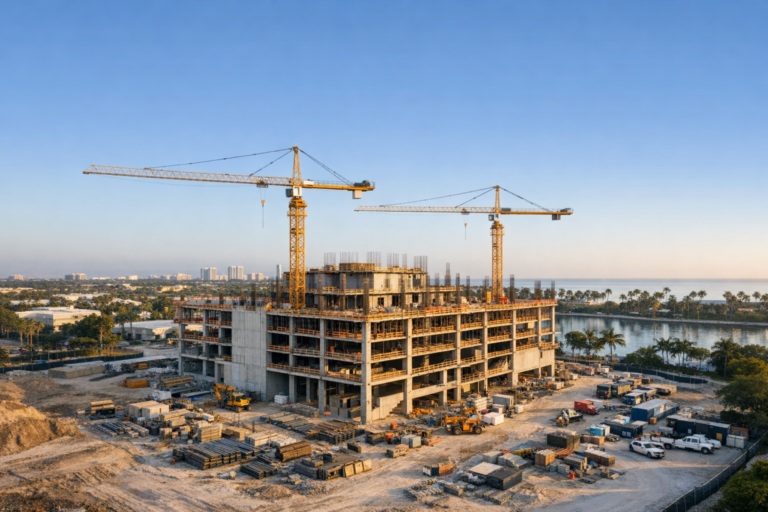
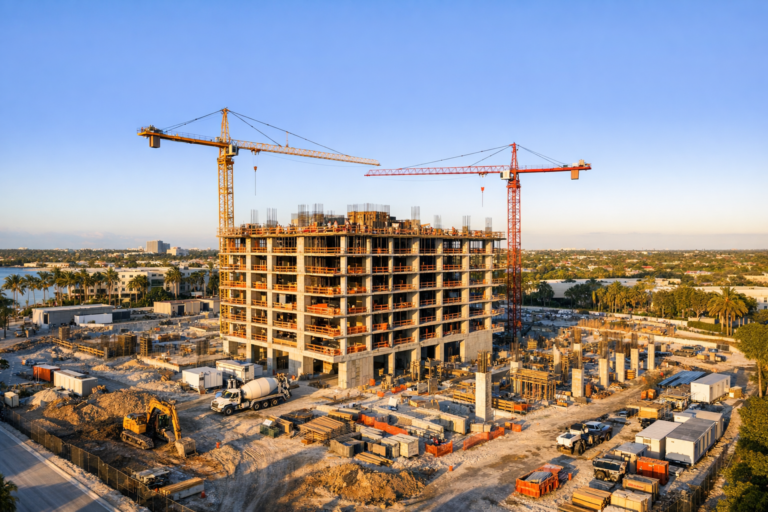
Commercial roofs in Fort Lauderdale work hard year-round. Intense sun, heavy rain, tropical storms, salt air, rooftop mechanical equipment, and frequent maintenance traffic can all affect roof performance over time. For property owners, facility managers, contractors, and commercial real estate teams, knowing what is happening on the roof is essential before small issues become expensive problems.
A professional drone roof inspection gives decision-makers a safer, faster, and more complete way to document visible roof conditions. Instead of relying only on ground-level observations or limited ladder access, drone photography and videography can capture high-resolution aerial views of flat roofs, parapet walls, drainage areas, rooftop equipment, penetrations, seams, ponding patterns, and surrounding site conditions.
For commercial buildings in Fort Lauderdale, this type of aerial documentation is especially valuable before hurricane season, after major weather events, during property transactions, throughout construction or renovation, and as part of routine facility maintenance. The key is understanding what drone roof inspections can do, what they cannot replace, and how to choose a qualified provider.
What Is a Commercial Drone Roof Inspection?
A commercial drone roof inspection uses an unmanned aircraft piloted by an FAA Part 107 certified drone operator to capture visual documentation of a building roof from above and at controlled angles. The goal is to provide clear aerial images and video that help owners, managers, contractors, or roofing professionals evaluate visible roof conditions without immediately placing personnel on the roof.
For many commercial properties, especially large flat-roof buildings, traditional inspection access can be time-consuming. Ladders, lifts, hatches, safety equipment, or coordination with tenants may be required. Drone imaging can often document broad roof areas efficiently while reducing unnecessary foot traffic on membranes and minimizing the need for risky access during the first stage of evaluation.
It is important to be clear: drone roof inspections are not a replacement for a licensed roofing contractor, engineer, or qualified roof consultant when a formal diagnosis, repair specification, or structural evaluation is needed. Instead, drone imagery provides accurate visual documentation that supports those professionals and helps property teams decide what needs closer attention.
Why Drone Roof Inspections Matter for Fort Lauderdale Commercial Buildings
Fort Lauderdale has a unique environment for commercial roofs. The region experiences strong UV exposure, seasonal downpours, humidity, tropical storm risk, and coastal air that can accelerate wear on exposed materials and rooftop components. Many commercial buildings also rely on flat or low-slope roofing systems where drainage performance is critical.
On a flat commercial roof, small issues are not always visible from the ground. Clogged drains, ponding water, lifted flashing, debris accumulation, membrane discoloration, damaged coping, displaced equipment panels, or open penetrations may only become obvious from above. Drone imagery helps reveal these conditions in context, showing not just the issue but its location relative to drains, equipment, walls, and roof sections.
This is especially helpful for property managers overseeing multiple buildings, investors evaluating a potential acquisition, general contractors documenting work, and commercial real estate professionals preparing marketing or due diligence materials. Aerial roof documentation provides a visual record that can be reviewed, shared, archived, and compared over time.
What a Drone Roof Inspection Can Help Document
Every roof is different, but drone photography and videography can be used to document a wide range of visible commercial roof conditions. The value comes from capturing both close visual detail and overall roof layout.
Drainage and ponding concerns
Low-slope roofs depend on drainage systems working properly. Drone imagery can show drains, scuppers, gutters, downspouts, areas of standing water, debris buildup, or staining that may indicate recurring ponding. After heavy rain, this documentation can be especially useful for identifying sections that require further review.
Membrane and surface conditions
High-resolution aerial images may reveal visible punctures, tears, blisters, discoloration, exposed areas, patchwork, seam irregularities, or areas with heavy debris. While imagery alone does not determine the full roof condition, it helps direct attention to areas that may require hands-on evaluation.
Flashing, parapets, and roof edges
Many commercial roof problems begin at transitions and edges. Drone angles can help document parapet walls, coping, flashing, roof-to-wall transitions, edge metal, and perimeter details that are difficult to see from the ground.
Rooftop equipment and penetrations
Commercial roofs often include HVAC units, vents, exhaust systems, skylights, satellite equipment, solar equipment, access hatches, and other penetrations. Drone documentation can help show the condition and layout of equipment areas, including debris, damaged panels, missing covers, or signs of poor drainage around curbs.
Storm-related visual documentation
After strong winds or severe weather, drone imaging can help property teams quickly document visible roof debris, displaced materials, damaged rooftop components, or areas that may need immediate professional review. This can be helpful for internal records, contractor coordination, and maintenance planning.
When Should Commercial Properties Schedule Drone Roof Documentation?
Drone roof inspections are useful in several scenarios. For many Fort Lauderdale commercial buildings, the best approach is not waiting until there is an emergency. Routine documentation creates a visual baseline, which can make later comparisons much more useful.
Common times to schedule drone roof documentation include before hurricane season, after major storms, before purchasing or selling a commercial property, before and after roof repairs, during construction or reroofing projects, when preparing maintenance budgets, and when facility teams need updated records of roof layout and rooftop equipment.
For construction and renovation projects, drone imagery can also help document progress, sequencing, material staging, and completed roof work from a consistent perspective. For property managers, periodic aerial documentation can support communication with owners, tenants, roofing vendors, and asset management teams.
How the Drone Roof Inspection Process Usually Works
A professional process begins before the drone ever leaves the ground. The pilot needs to understand the property location, building type, roof access limitations, intended use of the imagery, and any areas of special concern. For commercial properties in Fort Lauderdale, airspace and site conditions must also be considered.
Some locations may require additional planning due to proximity to airports, heliports, controlled airspace, busy roads, neighboring properties, or pedestrian activity. A qualified commercial drone operator should review airspace requirements, weather conditions, safe takeoff and landing areas, visibility, wind, and temporary site hazards before flight.
On site, the drone pilot captures images and video from multiple angles and elevations. Depending on the scope, this may include wide establishing views, top-down roof coverage, angled views of parapets and edges, closer documentation of specific concern areas, and video passes that show roof layout and context. The final deliverables are typically organized photos and video files suitable for review, reporting, or sharing with roofing and facility professionals.
What to Look for in a Fort Lauderdale Drone Roof Inspection Provider
Hiring a drone company for commercial roof documentation is not the same as hiring someone to take a few overhead photos. Commercial properties require a provider that understands safety, compliance, image quality, site coordination, and the needs of business decision-makers.
At minimum, the drone operator should hold a current FAA Part 107 remote pilot certification for commercial drone work. They should also understand how to evaluate airspace, operate around commercial properties, maintain safe distances from people and structures, and communicate clearly with property teams.
Experience matters because roof documentation requires more than attractive aerial images. The pilot needs to capture useful angles, maintain visual context, avoid missing important roof sections, and deliver files that are easy for stakeholders to review. For example, a property manager does not only need a beautiful skyline shot; they need clear images of drains, roof edges, equipment zones, and visible areas of concern.
It is also smart to ask how the company handles scheduling around weather, what deliverables are included, how files are organized, and whether the imagery will be captured for documentation, marketing, construction progress, or a combination of uses. The scope should match the business purpose.
Practical Tips Before Scheduling a Drone Roof Inspection
A little preparation improves the quality and usefulness of the final imagery. Before scheduling, identify the areas you most want documented, such as leaks reported by tenants, older roof sections, rooftop equipment zones, drains, recent repair areas, or storm-affected locations.
If the building has restricted areas, active construction, security procedures, loading docks, roof work, tenant operations, or scheduled maintenance, share that information in advance. This helps the pilot plan a safe and efficient flight. It is also helpful to provide a site contact who can confirm access, parking, and any on-site rules.
Weather matters. Drone flights should not be performed in unsafe wind or rain conditions, and roof documentation is usually best captured with adequate daylight and visibility. If the goal is to document ponding after rainfall, timing should be discussed carefully so the imagery reflects the condition you need to review while still allowing safe operations.
What Drone Roof Inspections Cannot Do
Drone imagery is powerful, but it has limits. A drone cannot physically probe roofing materials, test moisture inside the roof assembly, confirm hidden structural damage, or replace the judgment of a qualified roofing professional. Visual documentation may show signs that suggest a concern, but final conclusions about repair needs should come from the appropriate expert.
Drone flights are also subject to weather, airspace rules, visibility, safety limitations, and site conditions. In some cases, certain angles may not be safe or practical to capture. A professional provider should explain these limitations clearly and prioritize safe, compliant operations over getting a risky shot.
Frequently Asked Questions
How long does a commercial drone roof inspection take?
The flight time depends on the size of the building, roof complexity, number of areas to document, site conditions, and airspace requirements. A small commercial building may be documented relatively quickly, while a large retail center, industrial property, or multi-building site requires more planning and coverage time.
Do I need to be on site during the drone roof inspection?
Not always, but having a site contact available is helpful. Someone may need to confirm parking, access, restricted areas, tenant activity, or specific roof concerns. For active commercial properties, coordination improves safety and efficiency.
Can drone roof imagery be used for insurance or repair discussions?
Drone imagery can be useful visual documentation for internal records, contractor coordination, maintenance planning, and insurance-related discussions. However, requirements vary by situation, and any formal claim, repair recommendation, or engineering decision should be handled by the appropriate licensed or qualified professional.
Is a drone roof inspection safe for occupied commercial buildings?
When performed by a qualified FAA Part 107 certified pilot with proper planning, drone operations can often be conducted safely around occupied commercial properties. The pilot should evaluate people, vehicles, takeoff and landing areas, obstacles, wind, and airspace before flying.
How often should a commercial roof be documented by drone?
Frequency depends on the property type, roof age, maintenance history, storm exposure, and owner requirements. Many commercial property teams benefit from documentation before hurricane season, after major storms, and before or after significant roof work.
A Smarter Way to Document Commercial Roof Conditions
For Fort Lauderdale commercial buildings, drone roof inspections provide a practical way to see and document the roof from the perspective that matters most. Clear aerial photography and videography can help identify visible concerns, improve communication with roofing professionals, support maintenance planning, and create a reliable visual record over time.
The best results come from working with a commercial drone provider that understands both flight operations and the business purpose behind the imagery. Skyview Motions provides FAA Part 107 certified commercial drone photography and videography for South Florida properties, including roof documentation for commercial buildings, construction sites, real estate assets, and facility management teams.
If your team needs clear, professional aerial documentation of a Fort Lauderdale commercial roof, Skyview Motions can help you plan a safe, efficient drone inspection tailored to your property and objectives.