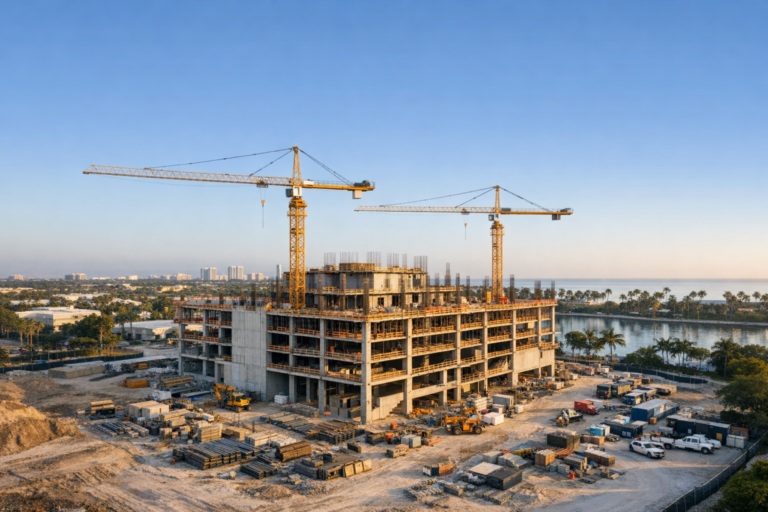
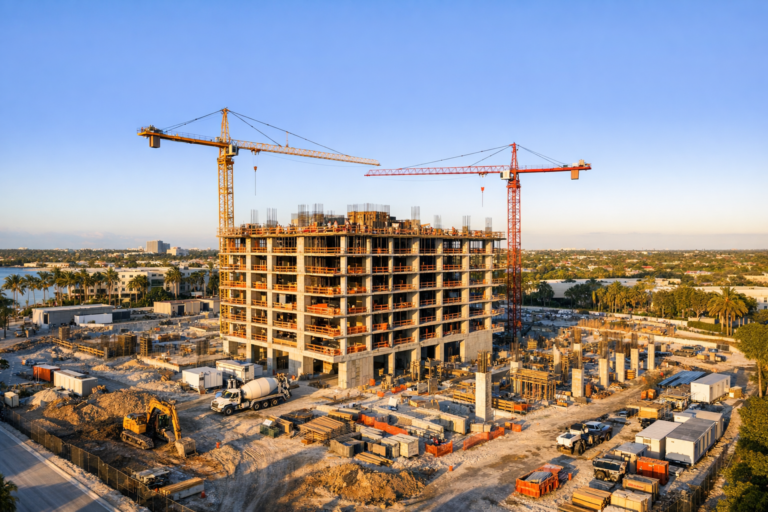
Construction projects move fast, and decisions are only as good as the information available when those decisions are made. On a busy job site, conditions can change daily. Materials arrive, trades rotate in and out, weather interrupts schedules, and small issues can become expensive if they are not documented early. That is why construction progress photography has become an essential tool for owners, developers, contractors, and project managers who need a clear visual record of what is happening on site.
When completed consistently and professionally, progress photography does more than create attractive aerial images. It helps teams verify work, communicate with stakeholders, track schedules, reduce misunderstandings, and maintain accountability from groundbreaking through completion. For commercial projects in South Florida, where weather, site access, coastal conditions, and tight development timelines can all affect progress, reliable visual documentation is especially valuable.
The goal is simple: give decision-makers a clear, dated, objective view of the project so they can manage it with confidence.
What Is Construction Progress Photography?
Construction progress photography is the ongoing visual documentation of a construction project at planned intervals. It may include drone photos, ground-level images, panoramic views, detail shots, and wide-site documentation that together show how the job is advancing over time.
Unlike one-time marketing photography, progress photography is designed for continuity. Images are typically captured from consistent angles, elevations, and locations so project teams can compare conditions week to week or month to month. This makes it easier to see what has changed, what is completed, what remains open, and where potential delays may be developing.
For commercial construction, drone photography is particularly useful because it captures the entire site in context. Aerial views can show building footprint, staging areas, parking lots, access roads, roofing progress, exterior envelope work, civil improvements, landscaping, and surrounding conditions in a way ground photos cannot.
Why Visual Documentation Helps Keep Projects on Track
Construction management depends on clarity. Schedules, drawings, reports, and meetings are all important, but there are moments when a current visual record answers questions faster than any written update. Progress photos help teams understand what is actually happening on site without relying entirely on memory, verbal updates, or fragmented notes.
It Creates a Reliable Timeline of Work
One of the biggest advantages of construction progress photography is the ability to build a chronological record. When images are captured on a consistent schedule, the project team can review the evolution of the site from early earthwork to structural completion and final exterior finishes.
This timeline can be useful for internal reporting, owner updates, lender documentation, insurance records, dispute prevention, project closeout, and future reference. If a question comes up about when a certain area was completed or when a condition first appeared, the photo archive may provide a clear answer.
It Improves Communication With Stakeholders
Not every stakeholder can visit the job site regularly. Owners, investors, executives, architects, engineers, property managers, and marketing teams may all need updates, but coordinating site visits for everyone is rarely practical. Professional progress photos give stakeholders a clear understanding of the project without requiring them to be physically present.
Aerial images are especially helpful because they make complex site activity easier to interpret. Instead of describing progress only through written reports, project teams can show sitework, vertical construction, roof installation, parking lot development, utility corridors, and surrounding access points in a single image set.
It Reduces Misunderstandings Between Teams
Construction involves many moving parts. General contractors, subcontractors, consultants, inspectors, and owners may all be focused on different scopes of work. When documentation is inconsistent, disagreements can arise over what was completed, when it was completed, or what condition existed at a specific point in time.
Progress photography provides a shared visual reference. While it does not replace contracts, inspections, or formal reporting, it supports clearer conversations. Teams can point to specific images and discuss actual conditions instead of relying on assumptions.
The Role of Drone Photography in Construction Progress Tracking
Drone photography has changed how construction teams document projects because it provides access to safe, efficient, high-level perspectives. A professionally operated drone can capture site-wide images that would otherwise require lifts, adjacent buildings, or limited vantage points.
For commercial projects, aerial documentation is valuable because it shows the relationship between different scopes of work. For example, a site overview can reveal how material staging affects access, how exterior work is progressing around multiple elevations, or how civil improvements align with building construction. This broader perspective helps teams identify workflow issues that may not be obvious from the ground.
Professional drone operators also understand that progress documentation is not just about flying high and taking a few photos. Useful construction images require planning, consistency, proper lighting, safe flight operations, awareness of active job site conditions, and a clear understanding of what construction teams need to see.
What Should Be Captured During Construction Progress Photography?
The best progress photo plan depends on the project type, phase, and reporting needs. However, most commercial construction documentation should include a mix of wide aerial views, targeted scope photos, and contextual site images.
Site-Wide Aerial Views
Wide aerial images help document the full construction site. These views are useful for showing overall progress, site logistics, adjacent roads, staging areas, drainage work, parking areas, and the relationship between the building and surrounding property.
Consistent Angle Comparisons
Repeatable views are one of the most important parts of effective documentation. Capturing the same angles over time allows teams to compare progress clearly. This is helpful for monthly owner reports, construction meetings, and before-and-after timelines.
Key Construction Milestones
Important milestones may include clearing, grading, foundations, slab placement, structural framing, roofing, exterior envelope progress, MEP rough-ins visible from accessible viewpoints, hardscape installation, paving, landscaping, and final completion. Drone photos can document many of these milestones from a perspective that shows scale and context.
Access, Staging, and Site Logistics
Progress photography is not limited to the building itself. Site access, laydown areas, equipment placement, temporary roads, fencing, deliveries, and traffic flow can all affect productivity. Aerial documentation helps project managers evaluate whether the site layout supports smooth operations.
How Progress Photography Supports Schedule Management
Schedules are planned in advance, but field conditions determine whether the plan is realistic. Construction progress photography helps teams compare planned progress against visible progress. If a building section was expected to be enclosed by a certain date, current images can confirm whether that milestone appears to be on pace.
Progress photos can also help identify patterns. If the same area looks unchanged across multiple documentation cycles, it may prompt a useful conversation. Is the delay caused by weather, materials, inspections, coordination, or a design question? The photo itself may not explain the cause, but it helps bring attention to areas that need review.
For project managers, this visual awareness can support earlier intervention. Instead of discovering issues weeks later, teams can use regular imagery as another tool for schedule oversight.
How It Helps With Accountability and Risk Management
Construction projects carry financial, operational, and legal risk. Well-organized photo documentation can help reduce uncertainty by creating a consistent record of site conditions. This can be important when reviewing change orders, evaluating weather impacts, documenting completed work, or resolving questions about site conditions.
For example, if heavy rain affects a South Florida job site, aerial images captured before and after the event may help document visible changes in site access, standing water, material exposure, or exterior conditions. If a question arises about when materials were staged in a particular area, a dated photo record may help clarify the timeline.
It is important to understand that progress photography is not a substitute for professional inspections, engineering evaluations, or legal documentation. However, it is a practical supporting record that adds transparency and context to project management files.
Best Practices for Effective Construction Progress Photography
Not all progress photos provide equal value. Random images captured at inconsistent times and angles may be difficult to use later. A professional approach makes the documentation more reliable and easier to interpret.
Use a Consistent Schedule
Many commercial projects benefit from weekly, biweekly, or monthly documentation, depending on the pace and complexity of the work. Fast-moving projects may require more frequent updates, while longer-term developments may only need monthly documentation.
Capture Repeatable Views
Consistent flight paths and camera angles help create meaningful comparisons over time. When the same views are repeated, stakeholders can immediately understand what has changed between updates.
Plan Around Lighting and Site Activity
Natural light affects image clarity. Early morning or late afternoon may produce more visually appealing results, but documentation needs may require capturing certain work areas when they are active and visible. The right timing depends on the purpose of the images.
Prioritize Safety and Compliance
Commercial drone operations should be performed by an FAA Part 107 certified remote pilot. Job sites also require awareness of cranes, equipment, workers, temporary structures, power lines, controlled airspace when applicable, and property boundaries. Professional operation matters because the documentation should never interfere with construction activity or compromise safety.
Organize and Label Deliverables
Photos are more useful when they are organized by date, phase, area, or viewpoint. A clear file structure saves time when teams need to locate a specific image months later.
Who Benefits From Construction Progress Photography?
Progress documentation supports many people involved in a commercial project. Owners and developers gain a clearer view of investment progress. General contractors can use images for reporting, coordination, and project meetings. Construction managers can track site conditions and identify areas that need attention. Architects and engineers can better understand how visible work is progressing. Marketing teams can use approved milestone imagery to support leasing, sales, investor updates, and project announcements.
Property managers and facility teams may also benefit after completion. A visual record of construction can provide helpful context for future maintenance, renovations, tenant improvements, or warranty discussions.
Choosing a Construction Progress Photography Partner
When hiring a drone photography company for construction documentation, look for more than attractive aerial images. The provider should understand commercial job sites, documentation consistency, safe drone operations, scheduling reliability, and the importance of delivering usable assets on time.
Ask how they plan repeatable views, how often they recommend capturing the site, what deliverables are included, and whether they are FAA Part 107 certified for commercial drone operations. It is also helpful to choose a company familiar with the local environment. In South Florida, weather windows, coastal winds, sun angle, controlled airspace, and dense development areas can all affect flight planning.
Skyview Motions provides commercial drone photography and videography services for construction teams throughout South Florida, with a focus on clear documentation, safe operations, and professional visual deliverables that support real project needs.
Frequently Asked Questions
How often should construction progress photos be taken?
The right frequency depends on the project schedule, budget, and reporting needs. Weekly or biweekly documentation is common for active projects with frequent changes. Monthly photography may be sufficient for slower-moving phases or long-term developments.
Is drone photography better than ground photography for construction documentation?
Drone photography and ground photography serve different purposes. Drone images are excellent for overall site context, roof areas, exterior progress, staging, and logistics. Ground photos are better for close-up details and interior conditions. Many projects benefit from using both.
Can construction progress photos help with disputes?
Progress photos can provide a dated visual record that helps clarify site conditions or visible work progress. They should be viewed as supporting documentation, not a replacement for contracts, inspection reports, professional evaluations, or legal advice.
Do commercial drone construction photos require a licensed pilot?
Yes. In the United States, commercial drone operations generally require the remote pilot to hold an FAA Part 107 certificate. A professional operator should also understand airspace, safety procedures, and job site coordination.
What deliverables should a construction team expect?
Typical deliverables may include edited high-resolution aerial photos, organized image folders, consistent viewpoint captures, and optional video clips depending on the scope. The deliverables should match the project reporting and documentation goals.
Conclusion
Construction progress photography keeps projects on track by giving teams a clear, consistent, and objective view of the job site over time. It improves communication, supports scheduling decisions, strengthens documentation, and helps stakeholders understand progress without relying on guesswork.
For commercial construction projects, especially in a dynamic South Florida environment, professional drone documentation can be a practical advantage from early sitework through closeout. When images are captured safely, consistently, and with a clear purpose, they become more than photos. They become a valuable project management resource.
If your team needs reliable construction progress photography for an active or upcoming project, Skyview Motions can help document your site with professional aerial imagery designed for clarity, consistency, and business use.