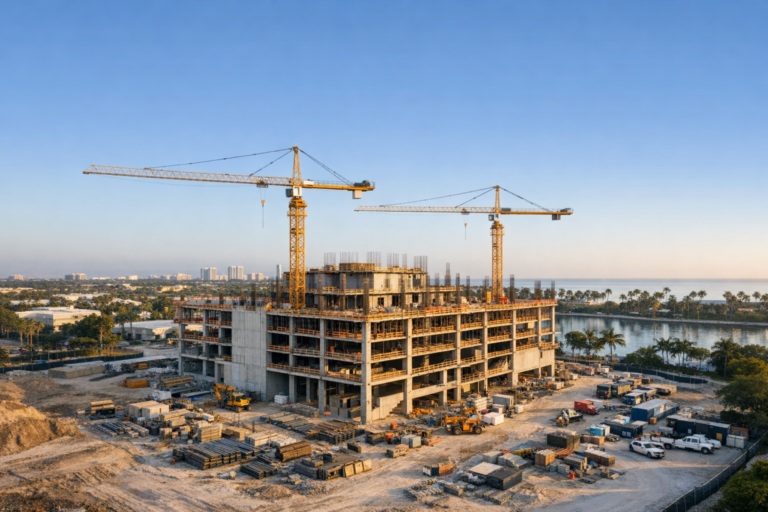
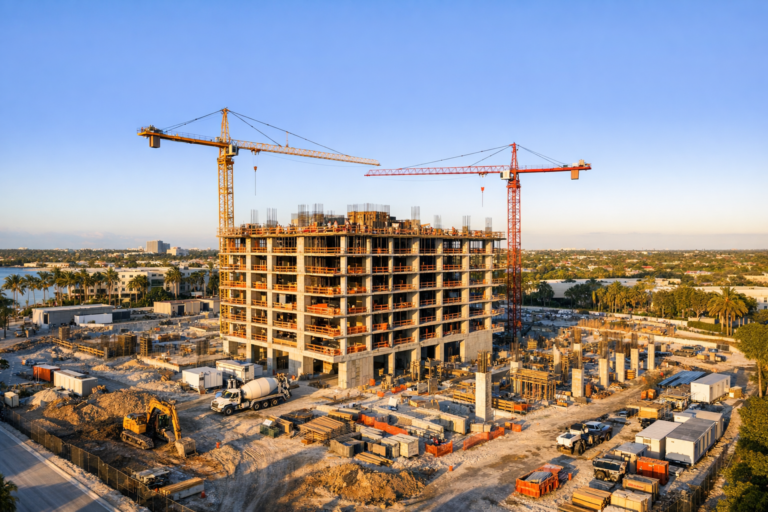
Roof and exterior work can change quickly on a construction site. Decking is covered, waterproofing layers disappear beneath finishes, mechanical penetrations get sealed, façade panels go up, and site conditions can look different from one week to the next. If that progress is not documented clearly, project teams may be left relying on limited ground photos, written notes, or memory when questions arise later.
Professional drone roof progress photography gives owners, developers, contractors, and project managers a clear visual record of what happened, when it happened, and how each phase of exterior construction is advancing. From roofing assemblies and envelope work to drainage areas, parapets, access points, staging, and surrounding site conditions, drone imagery helps teams see the project from a perspective that ground-level photography cannot easily provide.
For commercial construction projects in South Florida, where weather, access, safety, and scheduling can all affect exterior work, consistent aerial documentation is especially valuable. The goal is not simply to capture attractive images. The goal is to create useful project records that support communication, accountability, coordination, and confident decision-making.
Why Roof and Exterior Progress Is Difficult to Document from the Ground
Exterior construction often happens across large, elevated, or hard-to-access areas. On a commercial roof, important details may be spread across multiple sections, elevations, edges, and penetrations. On a building exterior, progress may involve multiple elevations, scaffolding, lifts, façade systems, waterproofing details, glazing, stucco, paint, metal panels, and site improvements happening at the same time.
Ground photography is still useful, but it has important limitations. Photos taken from one side of the building may miss roof sections, upper elevations, rear elevations, drainage patterns, staging areas, or the relationship between different scopes of work. Walking every area may also require access coordination, lift use, ladder access, safety escorts, or additional time from field staff.
A drone can document the roof and exterior from above and around the building without requiring crews to physically access every viewpoint. This creates a broader and more complete visual record while reducing disruptions to active construction operations.
What Drone Roof Progress Photography Captures
Well-planned drone documentation is not random aerial photography. It should be organized around the information the project team needs to see. For roof and exterior construction, that often includes both wide context views and more focused visual records of key areas.
Roof installation and sequencing
Drone imagery can show the sequence of roof work across large areas, including exposed decking, underlayment, insulation, membrane installation, coatings, tile or metal roof installation, and completed sections. When captured consistently over time, these images help teams understand how roof work is progressing relative to the schedule.
Penetrations, curbs, drains, and rooftop equipment areas
Commercial roofs often include mechanical curbs, vents, skylights, drains, scuppers, parapets, access hatches, and equipment pads. Aerial progress photos can help document when these areas are installed, coordinated, sealed, or prepared for future work. This can be useful for internal coordination and for maintaining a visual record before components are covered or surrounded by other trades.
Exterior envelope and façade progress
Drone photography can document progress on exterior walls, windows, waterproofing, cladding, stucco, paint, balconies, railings, canopies, and architectural features. For owners and design teams, this provides a practical way to review how the building envelope is taking shape without requiring constant site visits.
Site access, staging, and surrounding conditions
Roof and exterior work does not happen in isolation. Material staging, cranes, lifts, dumpsters, access roads, laydown areas, drainage, and adjacent properties can all affect production. Aerial images provide useful context that helps teams understand how the site is functioning around the building.
How Drone Documentation Supports Better Construction Management
The value of professional drone documentation comes from consistency, clarity, and usability. When flights are performed at planned intervals from repeatable perspectives, the resulting images become a practical management tool rather than a folder of miscellaneous photos.
Improved communication with stakeholders
Owners, investors, developers, architects, engineers, and off-site executives may not be able to visit a jobsite regularly. Drone progress photography gives them a clear understanding of roof and exterior progress without relying only on written updates. A single wide aerial image can often communicate site conditions faster than a lengthy report.
Better coordination between trades
Roofing, façade, mechanical, electrical, waterproofing, glazing, and sitework trades often overlap. Aerial documentation can help project teams identify where work is complete, where access is blocked, where materials are staged, and where coordination may be needed before the next trade moves in.
Clearer records for pay applications and milestone updates
Progress imagery can support discussions around completed work, milestone reporting, and project status updates. While photos do not replace contract documentation or professional verification, they can provide helpful visual context when reviewing progress with owners, lenders, consultants, or internal teams.
Reduced unnecessary site visits
Decision-makers often need visual confirmation before approving next steps or responding to questions. Drone imagery can reduce the need for some in-person visits, especially when the goal is to understand general roof or exterior progress. This can save time for busy project teams and improve communication speed.
Why Consistency Matters More Than a Single Flight
A one-time drone flight can be helpful, but construction progress documentation becomes far more valuable when it is consistent. Capturing each flight from similar angles, elevations, and distances allows teams to compare progress across weeks or months.
For example, if a commercial roof is photographed every two weeks from the same north, south, east, west, and overhead perspectives, the project team can clearly see which areas advanced, which areas remained unchanged, and how roof work relates to façade and site progress. This type of repeatable visual record is much more useful than a collection of unrelated photos taken from different positions each time.
Consistency also helps after the project is complete. If a question comes up months later about when a section was installed, what the roof looked like before equipment was placed, or how exterior work progressed before finishes were applied, an organized aerial record can help the team review the project history more efficiently.
Practical Uses for Roof and Exterior Drone Progress Photos
Different stakeholders use drone documentation in different ways. The same set of images may support field management, executive reporting, marketing, investor updates, and closeout records.
- General contractors can track sequencing, coordinate trades, and communicate status during project meetings.
- Developers and owners can monitor investment progress without visiting the site every week.
- Architects and engineers can review exterior conditions and overall progress from a broad perspective.
- Property managers can retain visual records of major roof or exterior improvements.
- Marketing teams can use approved aerial images to show development progress, project scale, and construction milestones.
- Roofing and exterior contractors can document completed phases, access challenges, and before-and-after conditions.
In practice, drone roof progress photography is most effective when the deliverables are planned around these use cases. If images are needed for construction records, the focus should be clear, repeatable documentation. If images are needed for public updates or marketing, the photographer may also capture polished hero images that show the project at its best while still reflecting actual progress.
Drone Photography Is Not a Replacement for Professional Inspection
It is important to understand what drone imagery can and cannot do. Drone photography can document visible roof and exterior conditions from the air. It can help teams observe progress, identify areas that may deserve closer review, and maintain a visual record over time.
However, drone photos do not replace inspections performed by licensed professionals, engineers, roof consultants, or code officials. They do not confirm hidden conditions, material compliance, fastening methods, waterproofing performance, or structural integrity. When a technical determination is needed, aerial images should be treated as supporting documentation rather than a final inspection conclusion.
This distinction matters because responsible drone service providers should not overstate what photos can prove. The most reliable approach is to use drone documentation alongside field reports, consultant reviews, project schedules, and formal inspection processes.
Important Planning Considerations Before a Drone Flight
For drone documentation to be useful, the flight should be planned before the pilot arrives. A professional provider will consider safety, airspace, site conditions, deliverable requirements, and the project team’s priorities.
Flight timing
Lighting affects image quality. Early morning or late afternoon can create attractive visuals, while midday may provide more even visibility across certain roof surfaces. In South Florida, weather can change quickly, so wind, rain, storms, and sun angle should all be considered when scheduling flights.
Shot list and priorities
The project team should identify the most important areas before the flight. That may include specific roof sections, elevations, penetrations, façade areas, loading zones, completed work areas, or areas with known coordination concerns. A clear shot list helps ensure the final image set is useful, not just visually appealing.
Site safety and active work zones
Drone operations must be coordinated with site activity. Pilots should avoid interfering with cranes, lifts, crews, material deliveries, and restricted areas. Professional drone operations prioritize safe flight planning, appropriate distances, and awareness of jobsite hazards.
FAA compliance
Commercial drone work in the United States should be conducted by a pilot operating under FAA Part 107 requirements. Depending on the location, airspace authorization may be required before the flight. Working with a qualified commercial drone provider helps ensure the operation is planned appropriately and legally.
What to Look for in a Drone Progress Photography Provider
Not every drone operator understands construction documentation. For roof and exterior progress work, technical awareness and consistency are just as important as camera quality.
When evaluating a provider, ask whether they understand construction sequencing, can capture repeatable progress angles, operate under FAA Part 107 requirements, carry appropriate insurance, and deliver organized files that are easy for the project team to use. It is also helpful to ask how they handle weather changes, airspace planning, jobsite coordination, and recurring flight schedules.
A strong construction drone photography partner should be able to provide both practical documentation and polished visuals when needed. The best results come from understanding the purpose of the imagery before the flight, not simply launching a drone and capturing random views.
Why This Matters for South Florida Construction Projects
South Florida presents unique documentation challenges. Commercial projects may deal with tight sites, coastal weather, fast-moving storms, high humidity, intense sun, active urban environments, and strict scheduling demands. Roof and exterior scopes are especially important because they affect weather protection, building appearance, and many downstream trades.
Drone documentation helps project teams maintain visibility despite these challenges. Whether the project is a commercial roof replacement, new multifamily development, retail center, industrial facility, hospitality property, or exterior renovation, aerial progress photos can provide a dependable record of work as it moves from exposed structure to completed envelope.
FAQ
How often should roof progress photos be taken?
The right frequency depends on the project schedule and how quickly exterior work is changing. Weekly, biweekly, and monthly flights are common for construction progress documentation. Faster-moving roof or façade phases may benefit from more frequent coverage.
Can drones photograph specific roof details?
Drones can capture visible roof areas and many exterior details from safe aerial perspectives. However, the ability to document small details depends on distance, safety constraints, lighting, access, and the type of imagery requested. Close technical evaluation should still be performed by qualified professionals when required.
Are drone photos useful for project closeout records?
Yes. Organized aerial progress photos can become part of a valuable project archive. They can show how the roof and exterior changed over time, what conditions looked like before later phases covered them, and how the completed building looked from multiple perspectives.
Can drone imagery help with roof repair or replacement projects?
Yes. For commercial roof repairs, reroofs, and replacements, drone photography can document existing conditions before work begins, progress during removal and installation, and final completion views. It is especially useful for large roof areas that are difficult to show from the ground.
Do drone flights disrupt construction activity?
Professional drone flights are planned to minimize disruption. Coordination with site management helps avoid conflicts with cranes, deliveries, lift operations, and active work zones. Safety and communication should always come before image capture.
Conclusion
Drone roof progress photography gives construction teams a clearer, safer, and more complete way to document roof and exterior work. When captured consistently, aerial images can improve communication, support coordination, create useful project records, and help stakeholders understand progress without always being on site.
The most valuable results come from a thoughtful approach: planned shot lists, repeatable perspectives, safe operations, FAA-compliant pilots, and deliverables designed for real construction use. For owners, developers, contractors, and property professionals in South Florida, professional drone documentation can be a practical part of managing complex roof and exterior projects.
Skyview Motions provides FAA Part 107 certified commercial drone photography and videography for construction progress, commercial real estate, and exterior project documentation throughout South Florida. If your project team needs clear, professional aerial progress records, our team can help plan and capture the visual documentation your project requires.