Construction sites change quickly. A slab pour, roof installation, utility trench, façade detail, or parking area can look completely different within a few days. If documentation happens too rarely, important work may be covered, delayed, or forgotten before it is captured. If it happens too often, teams may spend money collecting images that do not meaningfully improve reporting or decision-making.
The right construction progress photography frequency depends on the pace of work, project complexity, stakeholder expectations, and how the images will be used. A small tenant improvement project may only need milestone documentation, while a large commercial development may benefit from weekly or even more frequent aerial and ground-level coverage.
This guide explains how often to photograph a construction site, what factors should influence the schedule, and how to build a practical documentation plan that supports owners, developers, contractors, architects, engineers, lenders, and marketing teams.
Start With the Purpose of the Photos
Before choosing a schedule, define why the project needs progress photography. The ideal frequency is different for each use case.
Common reasons to document a construction site include:
- Owner and investor progress updates
- Construction management and team coordination
- Schedule verification and milestone records
- Pay application support
- Dispute avoidance and issue documentation
- Marketing and public relations content
- Pre-cover documentation before work is concealed
- Long-term archive of how the project was built
If the photos are primarily for executive reporting, monthly documentation may be enough. If the images are supporting active construction management, a weekly cadence is usually more useful. If the project includes critical activities such as major pours, crane picks, structural steel, roofing, exterior enclosure, or MEP rough-in before cover-up, additional milestone visits should be scheduled regardless of the normal cadence.
Common Construction Progress Photography Frequencies
There is no single schedule that fits every project, but most construction documentation plans fall into one of the following categories.
Monthly Photography
Monthly documentation is often appropriate for slower-moving projects, smaller commercial jobs, early-stage sitework, or projects where the main goal is to provide broad stakeholder updates. It can show general progress over time without creating an overwhelming amount of media.
Monthly photography works best when the project team does not need detailed week-to-week visual records. However, it may miss short-duration activities that are completed and covered between visits.
Biweekly Photography
Biweekly photography is a practical middle ground for many commercial construction projects. It provides more frequent visibility than monthly documentation while remaining efficient for teams that do not require weekly reporting.
This cadence is useful when visible progress occurs every couple of weeks, when owners want consistent updates, or when the project has moderate complexity but does not require highly detailed construction sequencing records.
Weekly Photography
Weekly photography is one of the most effective schedules for active commercial construction. It captures meaningful changes, supports regular reporting, and creates a dependable visual record that aligns well with weekly project meetings.
For general contractors, developers, and owners, weekly aerial and ground-level photography can help show site logistics, completed work, staging changes, exterior progress, roof work, civil improvements, and overall project advancement. It also reduces the risk of missing important work that changes quickly.
Twice-Weekly or Event-Based Photography
Some projects benefit from twice-weekly or event-based documentation during fast-moving phases. This is most common when work is progressing rapidly, when several trades are active at once, or when critical milestones need to be captured with precision.
Examples include major concrete pours, precast installation, steel erection, roof dry-in, exterior skin installation, paving, crane operations, or final site improvements. In these situations, the photography schedule should adapt to the construction schedule rather than follow a rigid calendar.
Daily Photography
Daily progress photography is usually reserved for highly complex projects, accelerated schedules, sensitive documentation needs, or specific phases where daily activity matters. While daily images can be valuable, they should be planned carefully so the added volume of photos remains useful and organized.
For most projects, daily drone coverage is not necessary from start to finish. A better approach is often weekly documentation with temporary increases during critical phases.
Recommended Photo Schedule by Project Type
The table below provides general guidance for choosing a starting point. The best schedule should still reflect the project scope, team needs, phase of work, and reporting requirements.
| Project Type | Recommended Frequency | Best Use |
|---|---|---|
| Small commercial build-out or renovation | Milestone-based or monthly | Document major visible phases and completion |
| Retail, restaurant, or office construction | Biweekly or weekly | Owner updates, schedule tracking, exterior progress |
| Multifamily or mixed-use development | Weekly | Consistent reporting, vertical progress, site logistics |
| Industrial, warehouse, or logistics facility | Weekly or biweekly | Large-site visibility, civil work, roofing, paving |
| Infrastructure or site development | Weekly, biweekly, or milestone-based | Earthwork, utilities, drainage, roads, and site access |
| Fast-track or high-visibility project | Weekly plus milestone visits | Detailed documentation and stakeholder communication |
Key Factors That Determine the Right Frequency
A smart construction progress photography plan is not based only on project size. Several practical factors should influence the schedule.
Project Phase
Different construction phases move at different speeds. Early sitework may show large visible changes from week to week, while interior finish work may require a different documentation approach. Vertical construction, exterior enclosure, roofing, paving, and final site improvements are often worth photographing more frequently because the visual progress is significant and easy for stakeholders to understand.
Stakeholder Reporting Requirements
Owners, investors, lenders, municipalities, and real estate teams may all have different expectations. If reports are delivered weekly, photography should usually match that schedule. If the team only reviews visual progress at monthly meetings, monthly or biweekly coverage may be sufficient unless important milestones occur in between.
Site Complexity
A simple single-building project may require fewer visits than a multi-building development with multiple active work zones. Larger sites benefit from consistent aerial vantage points because they show circulation, staging, access points, drainage areas, equipment movement, material storage, and overall site organization in a way that ground photos cannot.
Speed of Construction
The faster the site changes, the more often it should be photographed. A project with aggressive deadlines, overlapping trades, or multiple crews working simultaneously may need weekly or event-based coverage to maintain a useful visual record.
Risk and Accountability
Photography can help document existing conditions, completed work, weather impacts, site access, material staging, and areas that may later become difficult to verify. If documentation may be used to clarify project history, support communication, or reduce misunderstandings, more frequent coverage can be valuable.
Drone Photography vs. Ground Photography: How Often Do You Need Each?
Aerial and ground-level construction photography serve different purposes. The strongest documentation plans often use both.
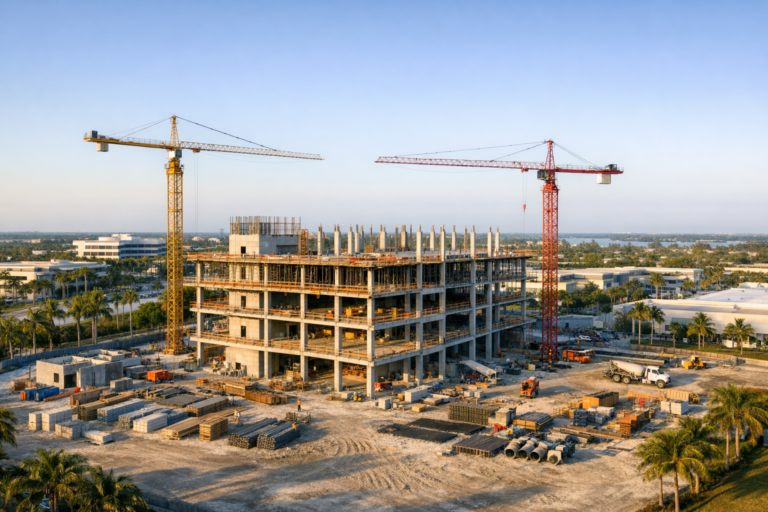
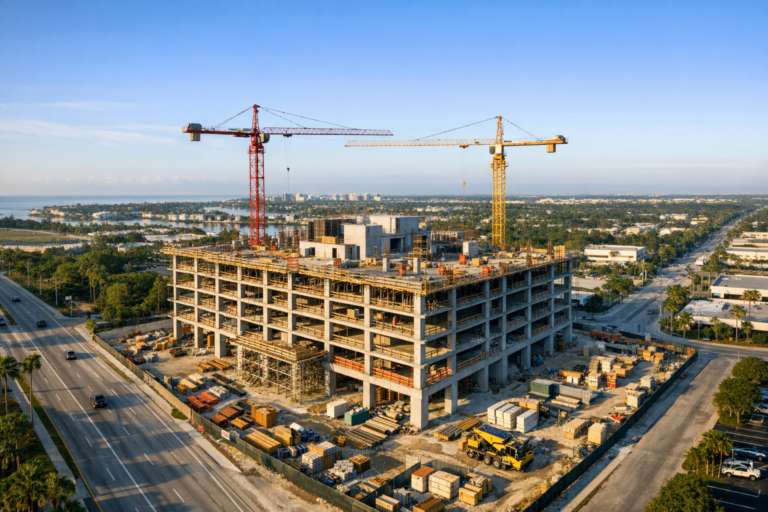
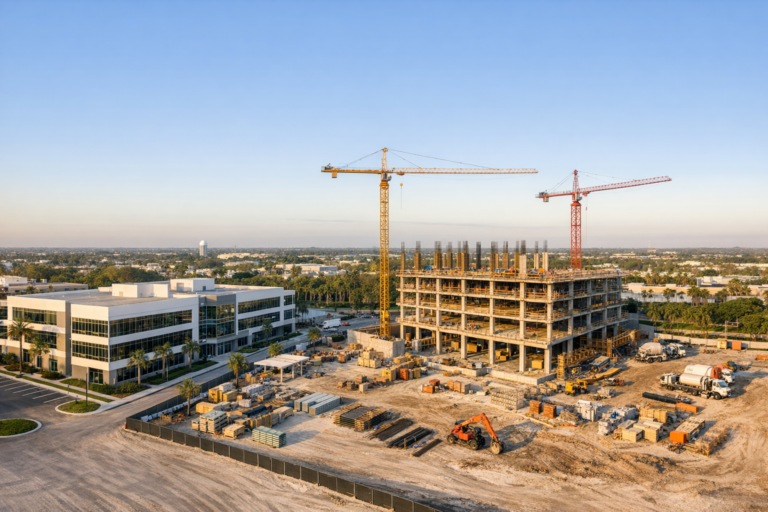
Drone photography is especially useful for showing the full site, roof areas, exterior progress, parking lots, drainage work, access roads, neighboring context, and large-scale sequencing. It provides a consistent overview that is difficult to capture from the ground.
Ground-level photography is better for close details, interiors, materials, workmanship, safety observations, equipment, and areas under cover. It is also useful when weather, airspace, site restrictions, or proximity to people and equipment make drone operations impractical on a specific day.
For many commercial projects, weekly drone photography combined with targeted ground photos creates a strong documentation package. During interior-heavy phases, the team may reduce aerial frequency and increase ground-level documentation. During roofing, paving, sitework, or exterior installation, aerial photography may become more important again.
What Should Be Captured During Each Visit?
Frequency is only one part of the plan. Consistency matters just as much. A well-organized progress photography visit should capture repeatable views so project teams can compare images over time.
Useful deliverables often include:
- Consistent aerial overview images from the same general angles
- Closer aerial views of active work zones
- Building elevations and roof progress when applicable
- Site access, staging, parking, and laydown areas
- Drainage, utilities, paving, and civil improvements
- Ground-level images of important details and milestones
- Wide photos suitable for reports, presentations, and marketing
When images are captured from consistent vantage points, the project team can more easily compare progress from week to week or month to month. This is especially valuable for owners and executives who may not visit the site regularly.
How to Build a Practical Photography Schedule
The most effective approach is to create a baseline schedule and adjust it around key milestones. For example, a project may use weekly photography as the standard cadence, then add extra visits for major pours, steel erection, topping out, roof completion, exterior enclosure, paving, landscaping, and final completion.
A practical plan should answer these questions:
- Who needs the photos and how often do they review them?
- What project phases need the strongest documentation?
- Are there lender, owner, or reporting requirements?
- Which milestones should trigger an additional visit?
- Are drone photos, ground photos, or both needed?
- How quickly should the images be delivered after capture?
- How will files be organized so the team can find them later?
File organization is often overlooked. A consistent naming structure, dated folders, and clear separation between aerial, ground, video, and milestone media can make the documentation far more useful months or years later.
South Florida Considerations for Construction Drone Photography
Construction photography in South Florida requires planning around local conditions. Weather can change quickly, especially during rainy season. Morning flights may provide calmer wind and cleaner light, while afternoon storms can affect scheduling. Coastal glare, humidity, nearby airspace, cranes, temporary structures, and active site operations should all be considered before each visit.
Commercial drone operations should be performed by an FAA Part 107 certified remote pilot and planned with safety, airspace rules, site coordination, and operational limitations in mind. On active construction sites, a professional drone provider should coordinate with the project team, avoid interfering with crews, maintain safe operating distances, and understand when conditions are not appropriate for flight.
FAQ
Is weekly construction photography necessary?
Weekly photography is not necessary for every project, but it is one of the most useful schedules for active commercial construction. It aligns well with project meetings and provides enough detail to show meaningful progress without creating excessive media.
Can monthly photos be enough for a construction project?
Monthly photos can be enough for smaller, slower, or lower-complexity projects. However, monthly documentation may miss important work that is completed between visits, especially during fast-moving phases.
Should photos be taken on the same day each week?
A consistent day can help with reporting, but construction schedules and weather sometimes require flexibility. It is usually more important to capture meaningful progress and key milestones than to force a visit on a day when conditions are poor or little has changed.
How many photos should be delivered after each visit?
The right number depends on the project size and scope. A small site may only need a focused set of key images, while a larger development may require extensive aerial overviews, detail shots, and ground-level documentation. Quality, consistency, and organization matter more than sheer volume.
When should extra photography visits be scheduled?
Extra visits are useful for major milestones such as concrete pours, steel erection, roof installation, exterior enclosure, significant sitework, paving, landscaping, inspections, topping out, and final completion. Any work that will soon be covered or difficult to verify later should be considered for additional documentation.
Choosing the Right Frequency for Your Project
The best construction progress photography frequency is the one that matches the pace, risk, complexity, and reporting needs of the job. For many commercial projects, weekly documentation provides the strongest balance of visibility and value. For smaller or slower projects, biweekly or monthly coverage may be sufficient. For fast-moving or high-stakes milestones, additional visits can help protect the project record and keep stakeholders informed.
A thoughtful photography schedule gives owners, contractors, and development teams a clearer understanding of what is happening on site. It improves communication, supports accountability, and creates a reliable visual archive from groundbreaking through completion.
Skyview Motions provides professional commercial drone photography and construction progress documentation for projects across South Florida. If you are planning a new project or want to improve your current reporting process, our team can help you choose a practical photo schedule that fits your site, timeline, and stakeholders.