Some of the most important work on a construction site is only visible for a short period of time. Once concrete is poured, walls are closed, roofing is installed, trenches are backfilled, or finishes are applied, critical details become difficult or impossible to verify without invasive investigation.
That is where progress photography becomes a practical risk-management tool. A consistent photo record helps owners, contractors, developers, architects, engineers, and property teams see what was completed, when it was completed, and what conditions looked like before they were covered up.
For commercial projects in South Florida, where weather exposure, moisture management, tight schedules, and coordination between multiple trades can create added complexity, construction documentation photography provides more than a visual update. It creates a usable record that supports communication, accountability, quality control, and long-term building knowledge.
Why Hidden Work Needs to Be Documented Before Cover-Up
Every construction project includes phases where completed work disappears behind another layer of construction. Electrical pathways may be concealed behind drywall. Plumbing lines may be buried under slabs or inside walls. Waterproofing may be covered by cladding. Roof assemblies may be hidden under membrane, decking, or finished materials. Site utilities may be backfilled before final site work begins.
When this work is not photographed clearly, teams may have to rely on memory, limited notes, or incomplete drawings. That can create problems later when questions arise about placement, sequencing, workmanship, or existing conditions.
Pre-cover photo documentation helps answer practical questions such as:
- Where were mechanical, electrical, plumbing, or fire protection systems routed?
- What did the waterproofing or flashing condition look like before enclosure?
- Was reinforcement, formwork, or substrate preparation visible before concrete or finishes were installed?
- What areas were complete before a weather event or schedule milestone?
- What conditions existed before another trade began work in the same area?
Photos do not replace inspections, approved drawings, or professional judgment, but they do provide a clear visual reference that can help teams make better decisions.
What Progress Photography Captures That Standard Site Updates Often Miss
Many project teams already take informal photos with phones. Those images can be useful, but they are often inconsistent, poorly organized, or focused on immediate issues rather than long-term documentation. Professional progress photography is different because it is planned, repeatable, and captured with the end use in mind.
A strong documentation program focuses on the areas and details most likely to matter later. This may include wide establishing views, elevation-specific images, overhead perspectives, close-up detail photos, and repeat shots from consistent vantage points.
Structural and Framing Conditions
Before walls, ceilings, soffits, or cladding are installed, photography can capture framing layout, openings, connections, blocking, penetrations, and other visible conditions. These images can become useful references when teams need to locate concealed elements or understand how a section was built.
MEP Rough-In Work
Mechanical, electrical, and plumbing systems are frequently hidden once drywall, ceilings, slabs, or finishes are installed. Photos of rough-in conditions can help project teams verify routing, spacing, access points, sleeve locations, and coordination between trades.
Waterproofing, Roofing, and Building Envelope Details
For commercial buildings in South Florida, the building envelope deserves careful attention. Waterproofing membranes, roof transitions, parapets, penetrations, flashing, and drainage-related details are often covered quickly as work progresses. Clear images taken before cover-up can help document visible conditions at important stages.
Underground and Site Utility Work
Once trenches are backfilled, visual access is gone. Documentation of underground utilities, drainage systems, conduit, stormwater infrastructure, and site preparation can support future maintenance, repair planning, and coordination with civil or site teams.
How Drone Photography Adds Value to Construction Documentation
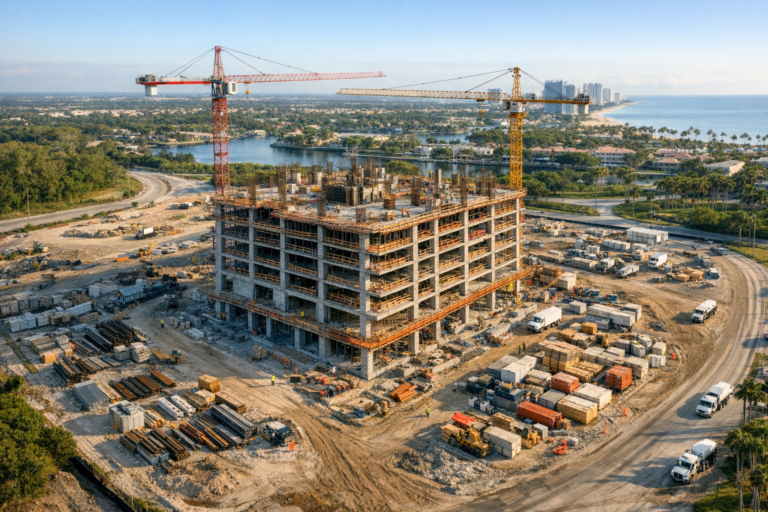
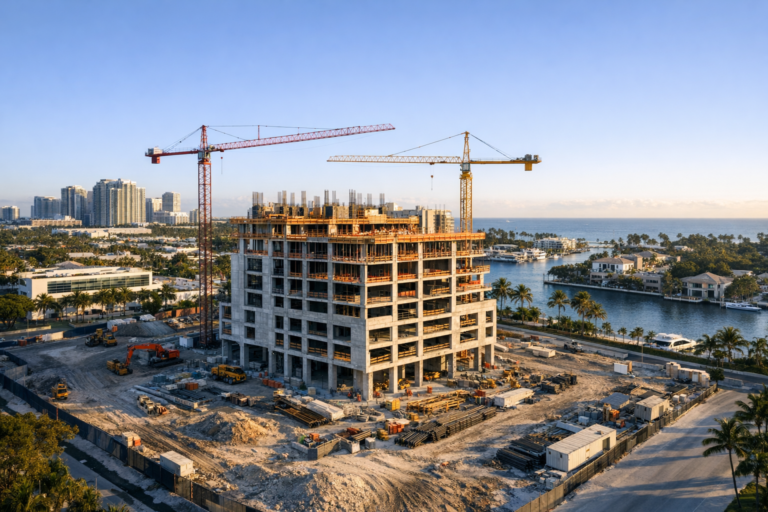
Ground-level documentation is important, but it does not always show the full picture. Drone photography provides a broader perspective that is especially useful on commercial sites, large properties, multi-building developments, roof work, vertical construction, and phased site improvements.
From the air, stakeholders can understand site progress, logistics, staging, access routes, exterior envelope work, roof conditions, and relationships between different building areas. Aerial views can also help show what changed between documentation dates in a way that is easy for owners and remote decision-makers to understand.
Drone imagery is particularly valuable before work is concealed across large or elevated areas. For example, aerial photos can document roof deck conditions before membrane installation, exterior sheathing before cladding, parking lot base preparation before paving, or site drainage work before backfill and surface improvements.
When captured by an FAA Part 107 certified operator, commercial drone photography can be planned safely and professionally around active jobsite conditions, airspace requirements, people, equipment, and property constraints.
When to Schedule Pre-Cover Progress Photography
The best time to plan documentation is before the project reaches a critical stage, not after a question comes up. Scheduling photography around predictable milestones gives teams a more complete and useful record.
Common pre-cover documentation points include:
- Before concrete pours, topping slabs, or major encapsulation work
- Before drywall, ceiling, or wall closure
- Before insulation covers framing, waterproofing, or rough-ins
- Before roofing systems or roof finishes conceal substrate conditions
- Before exterior cladding, stucco, or façade systems are installed
- Before trench backfill or site utility cover-up
- Before paving, landscaping, or finished site improvements
- Before turnover of a phase, floor, building, or exterior area
For longer projects, monthly or biweekly progress photography may be appropriate. For fast-moving phases, documentation may need to happen weekly or at specific milestone dates. The right schedule depends on project size, pace, complexity, and the level of documentation required by the owner or project team.
What Makes Construction Documentation Photography Useful
Not all construction photos are equally valuable. A useful photo record must be clear, organized, and consistent enough for people to interpret later, even if they were not on site when the image was captured.
Consistent Vantage Points
Repeatable camera positions help teams compare progress over time. When the same area is photographed from similar angles at regular intervals, changes become easier to identify and explain.
Wide, Medium, and Detail Views
Wide shots establish location and context. Medium shots show the relationship between systems, trades, or building areas. Detail shots capture specific assemblies, penetrations, connections, or conditions. Using all three creates a more complete record.
Logical Organization
Photos should be grouped by date, building, elevation, floor, phase, or work area whenever possible. A disorganized folder of hundreds of images can be difficult to use. A well-structured deliverable saves time when teams need to find a specific condition.
Clear Image Quality
Photos should be sharp, properly exposed, and taken from angles that communicate the condition clearly. Blurry images, extreme shadows, and poor framing can limit the usefulness of documentation, especially when the photo may be referenced months or years later.
Practical Benefits for Owners, Contractors, and Project Teams
Progress photography before cover-up provides value across the project team. For owners and developers, it creates visibility into work that may not be obvious during a site walk. For general contractors and construction managers, it supports coordination, reporting, and issue resolution. For architects and engineers, it can provide helpful context when reviewing field conditions. For property managers, it can become a reference after turnover.
In real-world project management, documentation can help reduce confusion. If a future tenant improvement team needs to understand where a line may have been routed, pre-cover images may provide clues. If an owner asks what work had been completed before a major weather event, dated progress imagery can help establish visible site conditions. If a trade needs to coordinate with another trade’s concealed work, the photo record may save unnecessary investigation.
The greatest value often appears later, when the cost of not having documentation becomes clear. A well-planned image archive can help teams avoid guesswork, speed up conversations, and preserve knowledge that might otherwise leave the project when personnel change.
How to Plan an Effective Photo Documentation Scope
Before hiring a photography or drone services provider, project teams should define what they need the images to accomplish. The scope does not have to be complicated, but it should be intentional.
Consider the following questions:
- Which areas will be covered up soon?
- Which systems or assemblies are most important to document?
- Who will use the photos: ownership, field teams, design professionals, marketing, or property management?
- How often should documentation occur?
- Are aerial views, ground photos, or both needed?
- Should images support internal records, progress reporting, marketing updates, or all of the above?
- How should files be organized and delivered?
It is also important to coordinate documentation with site access, safety requirements, active work zones, and jobsite leadership. Professional drone operations require planning around people, equipment, airspace, weather, and site conditions. On construction sites, communication with the project team is essential.
Common Mistakes to Avoid
One of the biggest mistakes is waiting until after work is already covered. Once drywall, concrete, roofing, cladding, or backfill is in place, the opportunity for clear visual documentation may be gone.
Another mistake is relying only on random phone photos from different team members. While those photos may help in the moment, they often lack consistency and may not be easy to locate later. Without a plan, the most important condition may be missed.
Teams should also avoid capturing only close-ups with no context. A detailed photo of a pipe, connection, or assembly is much more useful when paired with wider images that show where it is located.
Finally, documentation should not be treated only as a marketing task. Beautiful aerial images are valuable, but construction documentation must also be practical, organized, and aligned with project needs.
FAQ
What is construction documentation photography?
Construction documentation photography is the planned capture of jobsite images that record progress, visible conditions, and important construction details over time. It can include ground-level photos, aerial drone images, detail photos, and repeat progress views.
Why is it important to photograph work before it gets covered up?
Once work is concealed behind walls, concrete, roofing, cladding, or backfill, it can be difficult to verify without demolition or invasive inspection. Pre-cover photos create a visual record that can support future coordination, maintenance, quality review, and project communication.
Can drone photography replace site inspections?
No. Drone photography does not replace inspections, approved construction documents, or professional evaluation. It supports the project team by providing visual documentation from useful perspectives, including areas that may be difficult to view from the ground.
How often should a construction site be photographed?
The schedule depends on the size and pace of the project. Monthly documentation may work for slower phases, while weekly or milestone-based photography may be better when work is moving quickly or when important assemblies are about to be concealed.
What should be included in a pre-cover photo package?
A useful package typically includes wide context images, medium-range area photos, detailed close-ups, and repeat aerial or ground views where appropriate. The images should be organized by date, location, phase, or work area so they can be found later.
Document the Work While It Is Still Visible
Progress photography is most valuable when it is captured at the right time. Before critical work is covered by the next phase of construction, clear visual documentation can preserve details that may matter during coordination, closeout, maintenance, or future improvements.
For commercial projects, construction documentation photography is not just about showing progress. It is about reducing uncertainty, improving communication, and creating a reliable record of visible field conditions.
Skyview Motions provides professional commercial drone photography and construction progress documentation for projects throughout South Florida. If your team has an upcoming cover-up milestone, roof phase, site utility phase, or construction progress reporting need, planning the documentation now can help protect the value of the work once it is no longer visible.