Commercial properties are judged quickly. Before a prospect reads the offering details, studies the floor plan, or contacts a broker, they usually see the photos first. Those images create an immediate impression about the quality of the asset, the professionalism of the listing, and whether the property is worth a closer look.
That is why commercial real estate photography is more than a visual add-on. It is part of the sales and leasing strategy. The right photo package can help a property appear credible, well maintained, accessible, and market-ready. The wrong images can make a strong asset look dated, poorly managed, or less valuable than it really is.
For commercial real estate professionals, developers, property managers, and business owners, professional photos are often the first opportunity to build trust. They show the property clearly, answer practical questions, and help potential buyers, tenants, and investors picture the opportunity before visiting in person.
Why First Impressions Matter in Commercial Property Marketing
Commercial real estate decisions are rarely made from photos alone, but photos influence whether a prospect takes the next step. A buyer may decide whether to download an offering memorandum. A tenant may decide whether to schedule a tour. An investor may decide whether the property fits their acquisition criteria.
In competitive South Florida markets, visual presentation is especially important. Office buildings, retail centers, industrial facilities, medical spaces, hospitality properties, and development sites often compete for attention across listing platforms, broker emails, websites, social media, and investor presentations. When prospects are scanning multiple options, strong imagery helps create pause, interest, and confidence.
Professional photography also communicates care. A clean, well-composed exterior photo suggests that the asset is being represented seriously. A thoughtful aerial image helps the viewer understand location and access. A consistent set of interior photos gives prospects a clearer sense of layout, condition, and usability. Together, those details support a stronger first impression.
What Professional Photos Communicate Before Anyone Visits
A commercial property photo does more than show what a building looks like. It communicates context, scale, condition, positioning, and potential. When planned correctly, a photo package can answer many of the early questions a prospect is already asking.
Property Condition and Professionalism
Sharp, properly exposed images make a property look maintained and ready for evaluation. Professional photography can highlight clean entrances, updated common areas, quality finishes, functional parking areas, signage opportunities, landscaping, loading zones, and other features that matter to commercial users.
This does not mean photos should hide problems or misrepresent the property. Trustworthy marketing depends on accuracy. The goal is to present the asset clearly and at its best, not to create unrealistic expectations. A prospect who arrives for a tour should feel that the photos were helpful and honest.
Location and Surrounding Context
Location is one of the most important factors in commercial real estate, yet ground-level photos often fail to show it well. Aerial photography helps explain the property in relation to roads, nearby businesses, neighborhoods, parking areas, entrances, visibility corridors, waterways, and surrounding development.
For example, an aerial image of a retail center can show access from a main road, proximity to traffic patterns, parking capacity, neighboring anchors, and overall site layout. For an industrial property, drone photos can show truck access, yard space, roof size, loading areas, and adjacency to major routes. That context helps prospects make faster, more informed decisions.
Scale and Layout
Commercial properties can be difficult to understand from a few exterior snapshots. Professional photography, especially when combined with aerial perspectives, helps communicate scale more effectively. A wide exterior view can show frontage and parking. A top-down aerial can show parcel layout. Interior photography can clarify ceiling height, open areas, corridors, common spaces, and usable flow.
When buyers and tenants understand scale before visiting, tours become more productive. They arrive with fewer basic questions and a stronger sense of whether the property may fit their needs.
How Commercial Real Estate Photography Supports Leasing and Sales
Strong photography helps commercial marketing materials work harder across every channel. The same image set may be used in listing platforms, brochures, offering memorandums, email campaigns, websites, pitch decks, social media, press announcements, and stakeholder updates.
For brokers, professional photos can help attract more qualified inquiries. When the property is shown clearly, prospects can better self-screen before contacting the listing team. That saves time and improves the quality of conversations.
For property owners, better imagery can strengthen perceived value. A property that is photographed with care often feels more established and professionally managed. This can be especially useful when marketing repositioned assets, newly renovated spaces, vacant commercial units, or properties in locations where surrounding context is a key selling point.
For developers and investors, photography can support a broader story. Images can document progress, highlight improvements, show market positioning, and create visual materials for partners, lenders, tenants, and future campaigns.
Key Images Every Commercial Property Should Consider
The best photo package depends on the property type and marketing objective. However, most commercial listings benefit from a strategic mix of ground-level, interior, detail, and aerial images.
Exterior Establishing Shots
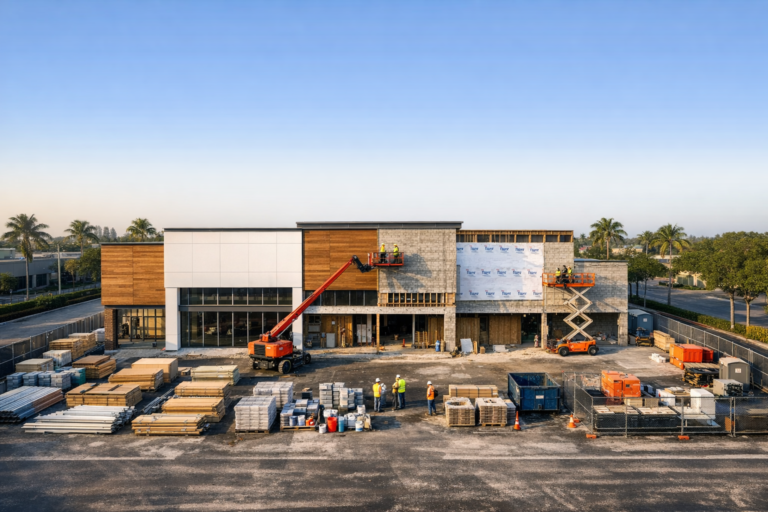
These are the main images that introduce the property. They should show the building or site clearly, with clean composition, natural light, and minimal distractions. Exterior images often work best when captured at times of day that avoid harsh shadows and show the property in a flattering but realistic way.
Entrances, Signage, and Frontage
Prospects want to understand how the property presents itself from the street. Photos of entrances, monument signs, storefronts, lobby access, and frontage help communicate visibility and identity. For retail and office properties, these images can be especially important.
Parking, Access, and Circulation
Parking and access are practical concerns for tenants, customers, employees, and service providers. Photos that show parking fields, drive aisles, access points, loading areas, and pedestrian flow help answer real operational questions.
Interior Spaces and Common Areas
Interior photography should show the property honestly and clearly. This may include lobbies, suites, offices, conference areas, retail interiors, restaurant spaces, medical buildouts, warehouse interiors, restrooms, elevators, corridors, and amenity areas. The goal is to help prospects understand layout, condition, and potential use.
Aerial and Drone Perspectives
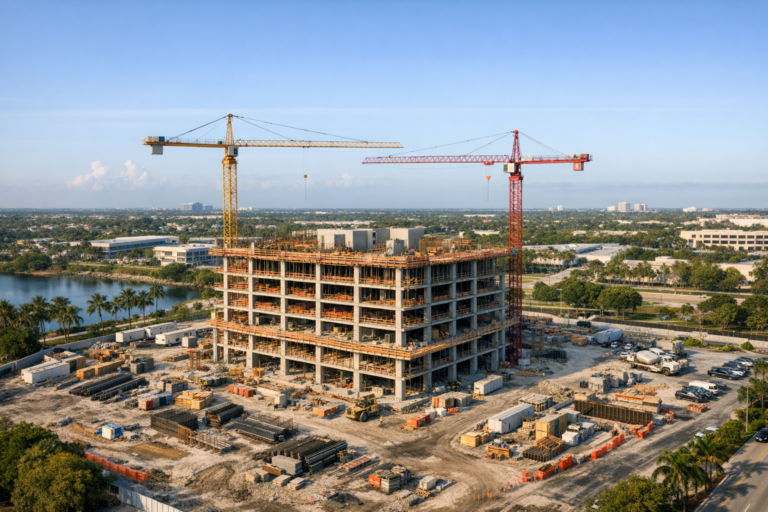
Drone photography is especially powerful for commercial real estate because it shows what ground-level images cannot. Aerial views can reveal site boundaries, roof condition from a visual perspective, surrounding development, ingress and egress, proximity to major roads, and the overall setting. For larger assets, multi-building properties, shopping centers, industrial sites, and development parcels, aerial imagery is often essential.
Why Drone Photography Adds Value to Commercial Listings
Professional drone imagery gives decision-makers a broader view of the property. It can help answer strategic questions such as: How visible is the building? How is the site positioned? What surrounds it? How much parking is available? What is the relationship between the property and nearby roads or amenities?
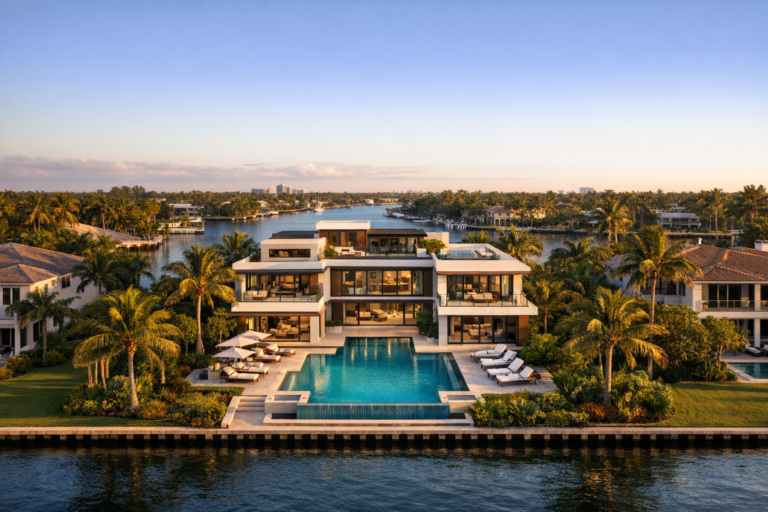
In South Florida, drone photography can also help capture features that matter in the local market, including water proximity, urban density, coastal context, transportation corridors, landscaping, and neighboring commercial development. These visual details can help a listing feel more complete and easier to evaluate.
Drone operations must be handled responsibly. Commercial drone work should be performed by an FAA Part 107 certified remote pilot who understands airspace considerations, safety, weather, property access, and operational planning. A professional approach protects the project, the public, and the quality of the final visuals.
What Separates Professional Photography from Basic Property Photos
Many property teams can take quick photos with a phone, but commercial marketing usually requires a more deliberate approach. Professional photography considers composition, light, perspective, exposure, lens selection, visual sequence, editing consistency, and the business purpose of each image.
A professional also looks for the details that influence perception. Is the camera angle making the building look distorted? Are cars blocking the storefront? Is the sky overexposed? Are interior lights balanced with natural window light? Does the image show enough context without becoming cluttered? Are the photos consistent across the full set?
These details matter because prospects often interpret image quality as a reflection of the listing quality. If the visuals feel rushed, the property may feel less credible. If the visuals are clean and intentional, the marketing feels more reliable.
How to Prepare a Commercial Property for a Photo Shoot
Preparation can significantly improve the final results. Before scheduling commercial real estate photography, property teams should walk the site and address visible distractions where possible.
- Clean entrances, windows, lobbies, and high-visibility common areas.
- Remove temporary clutter, trash bins, cones, loose materials, or unnecessary signage when appropriate.
- Coordinate with tenants or occupants if interior access is needed.
- Schedule landscaping, pressure washing, or exterior maintenance before the shoot when feasible.
- Identify key selling points the photographer should capture.
- Plan for parking lot conditions, access gates, and security requirements.
- Consider the best time of day based on sun direction and property orientation.
For active commercial sites, communication is important. Construction activity, customer traffic, deliveries, and tenant operations may affect timing. A clear plan helps the photographer capture the property efficiently while respecting business operations.
Choosing the Right Photography Partner for a Commercial Property
Not all photography providers approach commercial real estate the same way. The right partner should understand both the technical side of photography and the marketing goals behind the assignment.
When evaluating a provider, look for experience with commercial properties, not just residential listings. Commercial assets have different priorities: site context, access, parking, tenant appeal, building systems, visibility, use cases, and investor presentation. A provider should know how to create images that support those priorities.
If aerial imagery is part of the project, confirm that the drone operator is FAA Part 107 certified and follows safe operating practices. It is also helpful to work with a team that understands South Florida conditions, including changing weather, bright sunlight, coastal environments, urban airspace considerations, and the importance of efficient scheduling.
Skyview Motions provides commercial drone photography and videography for properties throughout South Florida, with a focus on clear, professional visuals that help businesses, brokers, owners, and project teams present properties with confidence.
Frequently Asked Questions
How many photos does a commercial property listing need?
The right number depends on the property size, type, and marketing use. A small storefront may need a focused set of exterior, interior, and street-view images. A larger office, retail, industrial, or multi-building property may need a more complete package with aerials, interiors, parking, access points, amenities, and surrounding context. Quality and relevance matter more than volume.
Is drone photography necessary for every commercial property?
Not every property requires aerial images, but many benefit from them. Drone photography is especially valuable for properties where location, site layout, parking, frontage, roof visibility, access, or surrounding development are important to the story. It is often a strong choice for retail centers, industrial sites, office buildings, development parcels, and larger commercial assets.
What time of day is best for commercial real estate photography?
The best time depends on the building orientation, sun direction, surrounding shade, and desired look. Early morning and late afternoon often provide softer light, while midday may work for certain properties where shadow placement is less of a concern. A professional photographer will consider how light affects the property and plan accordingly.
Should commercial property photos be edited?
Yes, professional editing is part of the process. Editing should improve clarity, exposure, color balance, and consistency while keeping the property realistic. Over-editing can create distrust if the property looks different in person. The strongest commercial images are polished, accurate, and credible.
Can professional photos help if a property has been on the market for a while?
Yes. Updated photos can refresh a listing, improve perception, and better communicate the property’s strengths. If earlier images were dark, limited, outdated, or missing important context, a new photo package may help the listing compete more effectively and support renewed marketing efforts.
A Strong First Impression Starts with Clear Visuals
Professional photos help commercial properties make a stronger first impression by showing the asset clearly, accurately, and strategically. They help prospects understand the property faster, evaluate whether it fits their needs, and feel more confident taking the next step.
In commercial real estate, strong visuals are not just about making a property look attractive. They are about helping buyers, tenants, investors, and decision-makers see the opportunity. From ground-level photography to professional drone imagery, the right visual package can make your marketing more useful, more credible, and more competitive.
If you are preparing to market a commercial property in South Florida, Skyview Motions can help you capture professional photography and aerial visuals that support a strong first impression and a more effective presentation.