When a development is finally complete, the work is not over. The project still has to be presented to the market, reviewed by stakeholders, promoted to tenants or buyers, and remembered by everyone involved. That presentation often begins with photography.
Professional real estate development photography does more than make a new property look attractive. It documents the finished product, communicates scale, highlights design decisions, supports leasing and sales efforts, and gives developers a polished visual asset library that can be used long after the ribbon is cut.
For commercial developers, general contractors, property owners, and marketing teams, the difference between quick photos and professionally planned visuals can directly affect how the project is perceived. A completed development represents a major investment. The imagery used to market it should reflect that level of care.
First Impressions Shape How the Development Is Valued
Most prospects will see a development online before they ever visit in person. Leasing brochures, property websites, listing platforms, press announcements, investor presentations, social media posts, and email campaigns all rely on visuals to create an immediate impression.
If the photos are poorly composed, taken in harsh light, missing important angles, or shot without a clear marketing purpose, the property may appear less refined than it really is. A well-executed photo set does the opposite. It helps the viewer understand that the project is complete, intentional, and professionally managed.
This matters across nearly every type of finished development, including multifamily communities, retail centers, industrial sites, office properties, hospitality projects, mixed-use developments, medical buildings, and master-planned communities. Strong photography helps people quickly understand what has been built, where it sits, how it functions, and why it has value.
Professional Photography Turns a Finished Project Into a Marketing Asset
A newly completed development has a limited window of visual freshness. Landscaping is new, exterior finishes are clean, site work is recently completed, and signage, lighting, hardscape, and common areas are usually in their best condition. Capturing the property during this period creates a long-term archive that can support marketing for years.
These images can be used across multiple channels, including:
- Commercial real estate listings and offering materials
- Developer and contractor portfolios
- Leasing presentations and tenant outreach
- Investor reports and stakeholder updates
- Public relations announcements
- Website project pages and case studies
- Social media and digital advertising campaigns
- Award submissions and architectural presentations
Because these uses often require different image formats, a professional photographer plans beyond one or two attractive hero shots. A complete deliverable set may include aerial overviews, ground-level architectural images, amenity photos, entry points, parking and access views, contextual images showing nearby roads or waterfronts, and detail shots that reveal craftsmanship.
Drone Photography Shows Scale, Context, and Location
Ground photography is important, but it cannot always communicate the full story of a development. Aerial imagery adds context that is especially valuable for commercial real estate and development marketing.
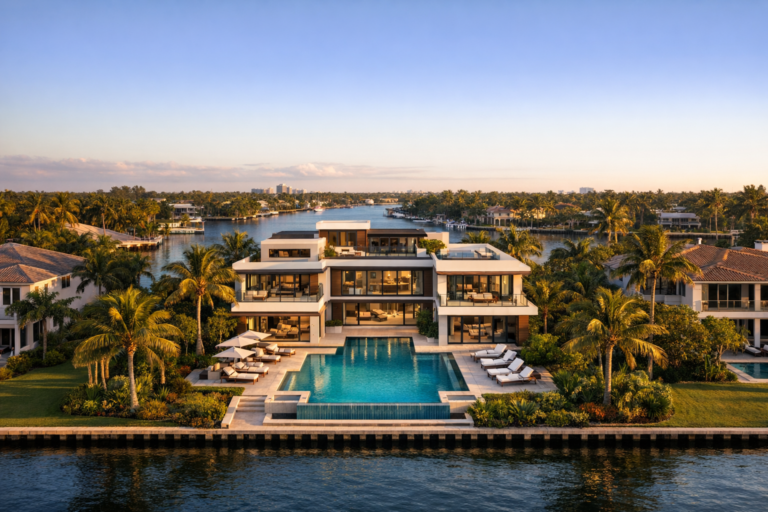
Drone photography can show the property boundary, building layout, traffic access, surrounding neighborhood, proximity to major roads, waterfront exposure, nearby retail corridors, adjacent residential areas, parking flow, and site improvements. For larger properties, this perspective is often the clearest way to communicate the complete scope of the project.
In South Florida, aerial images can also help highlight important location advantages such as coastal proximity, downtown access, marina or canal frontage, walkable commercial districts, resort-style outdoor areas, and regional connectivity. These features are difficult to explain with words alone and often become more persuasive when seen from above.
Why Aerial Images Are Especially Useful After Completion
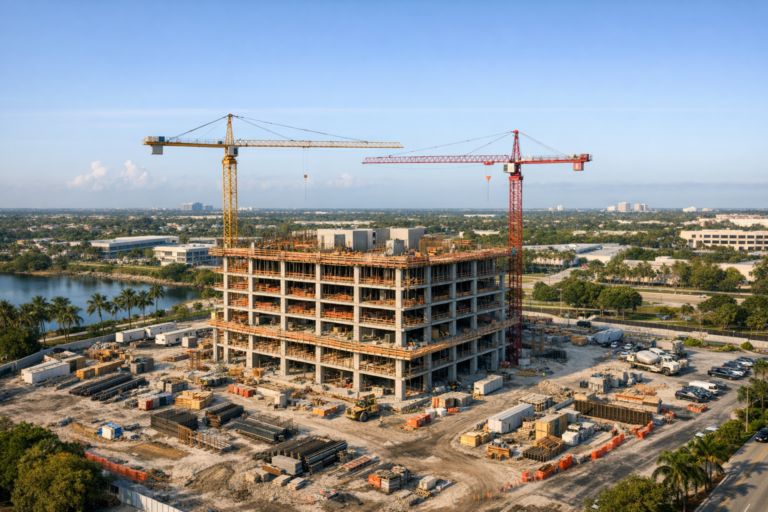
During construction, drone photography often focuses on progress documentation. After completion, the purpose shifts from tracking work to presenting the finished asset. The angles, lighting, altitude, and framing should be selected with marketing goals in mind.
For example, a construction progress image might prioritize showing roof installation or site activity. A completed-development image should instead emphasize the final building form, clean site conditions, landscape maturity, access points, and how the project fits into its surroundings.
Professional Images Help Leasing and Sales Teams Communicate Faster
Decision-makers are busy. Tenants, brokers, investors, buyers, and executives rarely want to spend time interpreting unclear visuals. Strong photography helps reduce friction by making the property easy to understand.
A well-planned image set can answer common questions before they are asked. Where is the entrance? How much parking is available? What does the amenity deck look like? How visible is the building from the road? What surrounds the property? How close is it to nearby commercial activity? How does the finished exterior compare with the renderings?
For leasing teams, this can make conversations more productive. For sales teams, it can make offering materials feel more complete. For developers, it can create consistency across every marketing channel instead of relying on scattered phone photos or outdated construction images.
Completed Developments Deserve More Than Basic Documentation
There is a difference between documenting that a project exists and presenting it in the strongest possible way. Basic documentation may show the building, but professional real estate development photography considers composition, light, scale, purpose, and end use.
Important decisions include:
- What time of day creates the most flattering light on the main elevations
- Which angles best show entrances, signage, and architectural features
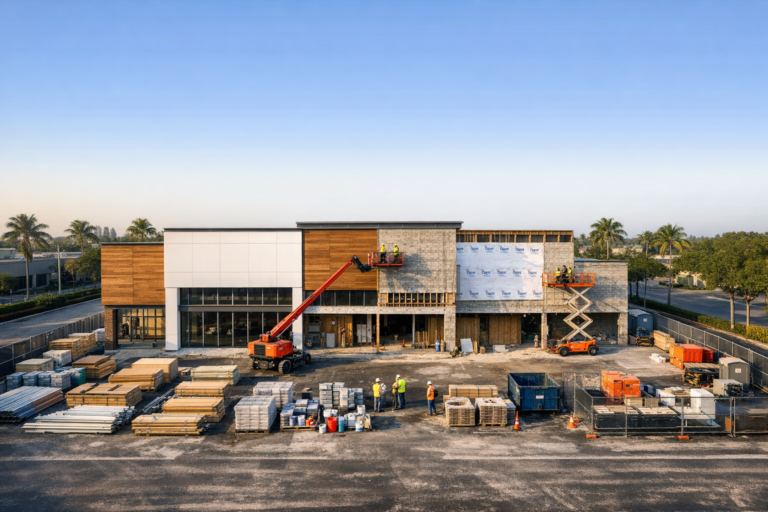
- How to avoid visual distractions such as temporary cones, dumpsters, or unfinished punch-list items
- When to capture amenities so they look clean, functional, and inviting
- Which aerial perspectives show both the property and surrounding advantages
- Whether twilight photography would strengthen the marketing story
- How to create both wide hero images and tighter detail shots
These choices are not accidental. They come from understanding how commercial properties are evaluated and how marketing teams actually use visual assets.
What a Strong Real Estate Development Photo Package Should Include
The right shot list depends on the property type, but most completed developments benefit from a balanced mix of perspectives. The goal is to create a visual library that supports both immediate promotion and future use.
Aerial Establishing Images
These images show the full development and its surrounding environment. They are useful for websites, brochures, investor decks, and press releases because they quickly communicate scale and location.
Ground-Level Architectural Photos
Ground images help viewers experience the property from a more human perspective. They capture building entrances, façades, landscaping, sidewalks, signage, lobby areas, exterior materials, and design details.
Amenity and Common Area Photos
For multifamily, hospitality, office, and mixed-use developments, amenities can be a major part of the value proposition. Pools, courtyards, fitness areas, rooftop spaces, clubrooms, plazas, and outdoor seating areas should be photographed with the same care as the exterior.
Context and Access Photos
Images that show road frontage, parking configuration, pedestrian access, nearby intersections, and surrounding businesses can be especially useful in commercial real estate. These photographs help prospects understand how the property functions in the real world.
Twilight or Golden Hour Images
Some projects benefit from photography near sunrise, sunset, or twilight, especially when architectural lighting, storefronts, hospitality features, or exterior amenities are part of the appeal. These images often work well as hero visuals, but they should be planned carefully because the best light may last only a short time.
Timing Matters: When to Schedule the Shoot
The best time to photograph a completed development is usually after major construction activity has ended, landscaping is installed, exterior cleaning is complete, and temporary site materials have been removed. However, waiting too long can create other issues, such as occupied parking areas, weathering, tenant modifications, or inconsistent property conditions.
For developers and project teams, it is helpful to coordinate photography near final completion or shortly after turnover. Before the shoot, review the property for avoidable distractions. Remove temporary signage when possible, clean high-visibility areas, confirm lighting schedules, and make sure landscaping is presentable.
In South Florida, weather and sun direction should also be considered. Bright midday sun can create harsh shadows, while late-afternoon storms may affect scheduling during certain seasons. A professional drone and photography team will plan around light, safety, airspace considerations, and the intended use of the final images.
Regulatory and Safety Considerations for Drone Photography
Commercial drone photography should be performed by an FAA Part 107 certified remote pilot. This is important because drone operations must be conducted safely and in compliance with applicable rules, including requirements related to controlled airspace, visual line of sight, people and vehicles, and operating conditions.
For developments near airports, dense urban areas, event venues, waterfront districts, or active commercial corridors, planning matters. A professional drone operator evaluates airspace, site access, potential obstacles, pedestrian activity, traffic patterns, and safe launch and landing areas before flight.
This level of preparation protects the project team and helps ensure the shoot runs smoothly. It also gives developers and property managers confidence that the imagery is being captured responsibly.
How Professional Photos Support Long-Term Brand Value
A completed project becomes part of a developer’s reputation. The way it is photographed can influence future opportunities, including investor confidence, tenant interest, municipal presentations, design awards, media coverage, and new business development.
For general contractors, architects, engineers, and consultants, final photos are often the strongest evidence of completed work. They show capability in a way that proposals and resumes cannot. For property owners and managers, strong imagery helps maintain a professional standard across leasing materials and online platforms.
The value is not limited to the initial launch. A polished image library can be reused when refinancing, repositioning, announcing tenants, promoting availability, updating a website, or showcasing a portfolio. That makes professional photography one of the most practical post-completion marketing investments a project team can make.
How to Prepare a Newly Completed Development for Photography
A little preparation can significantly improve the final result. Before the shoot, project teams should consider the following steps:
- Confirm that exterior cleaning, landscaping, and site work are complete
- Remove temporary fencing, cones, construction materials, and unused equipment when possible
- Coordinate with property management to reduce parked vehicles in key areas
- Turn on architectural lighting, signage lighting, fountains, or amenity lighting if relevant
- Clean glass, entry doors, lobbies, pool decks, courtyards, and amenity spaces
- Provide access instructions, parking details, and any site restrictions to the photography team
- Share the intended use of the images so the shot list supports the marketing goal
Clear communication before the shoot helps the photographer prioritize the most important angles and avoid missing details that matter to the project team.
FAQ
Why should we hire a professional instead of using phone photos?
Phone photos may be useful for quick updates, but they rarely provide the consistency, resolution, composition, aerial perspective, and polished presentation needed for commercial marketing. A completed development should be photographed with the same professionalism used to design, build, and market the property.
Do we need both drone and ground photography?
In most cases, yes. Drone photography shows scale, layout, and surrounding context, while ground photography captures the human-level experience, architectural details, entrances, and amenities. Together, they create a more complete story.
When is the best time of day to photograph a development?
The best time depends on the building orientation, sun position, property type, and desired mood. Early morning, late afternoon, and twilight can be effective for many projects. A professional photographer will evaluate the site and recommend timing based on light and marketing objectives.
How soon after completion should photography be scheduled?
Photography is typically most effective once construction activity has ended, cleaning is complete, landscaping is installed, and temporary site materials are removed. Scheduling soon after completion helps capture the property while it looks fresh and market-ready.
Is FAA certification required for commercial drone photography?
Commercial drone operations in the United States should be conducted by an FAA Part 107 certified remote pilot. This helps ensure the operator understands airspace, safety requirements, and responsible flight procedures.
Make the Finished Project Look as Strong as the Work Behind It
A newly completed development represents years of planning, coordination, investment, and execution. The final photography should honor that effort and help the market understand the value of what has been built.
Professional real estate development photography gives developers, owners, contractors, brokers, and marketing teams the visual tools they need to launch, lease, sell, document, and promote a project with confidence. The right images do more than show a building. They communicate quality, location, scale, and opportunity.
Skyview Motions provides commercial drone photography and videography for completed developments throughout South Florida. For project teams preparing to market a new property, professional aerial and ground visuals can help present the finished development clearly, accurately, and at its best.